2 February 2026
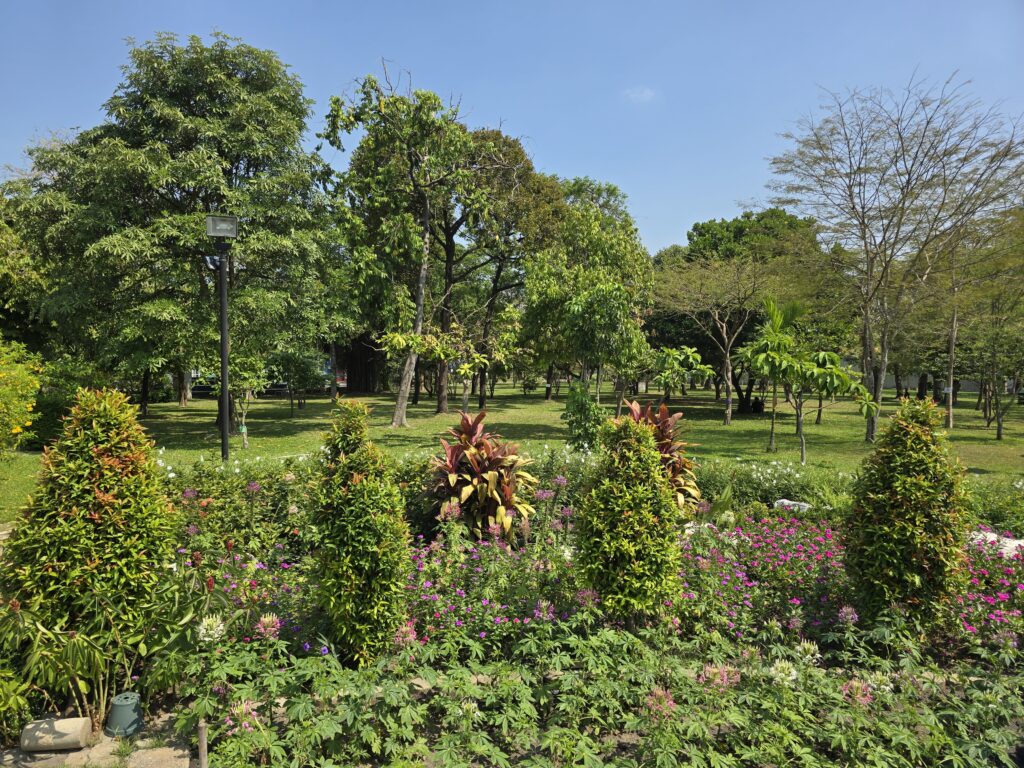
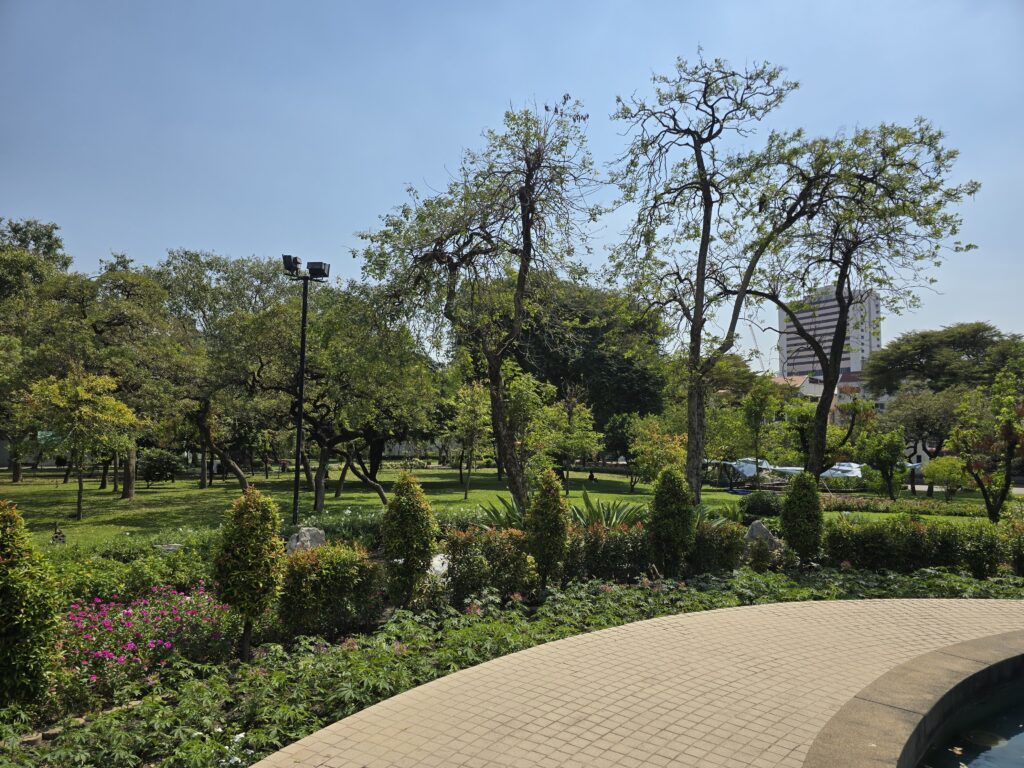
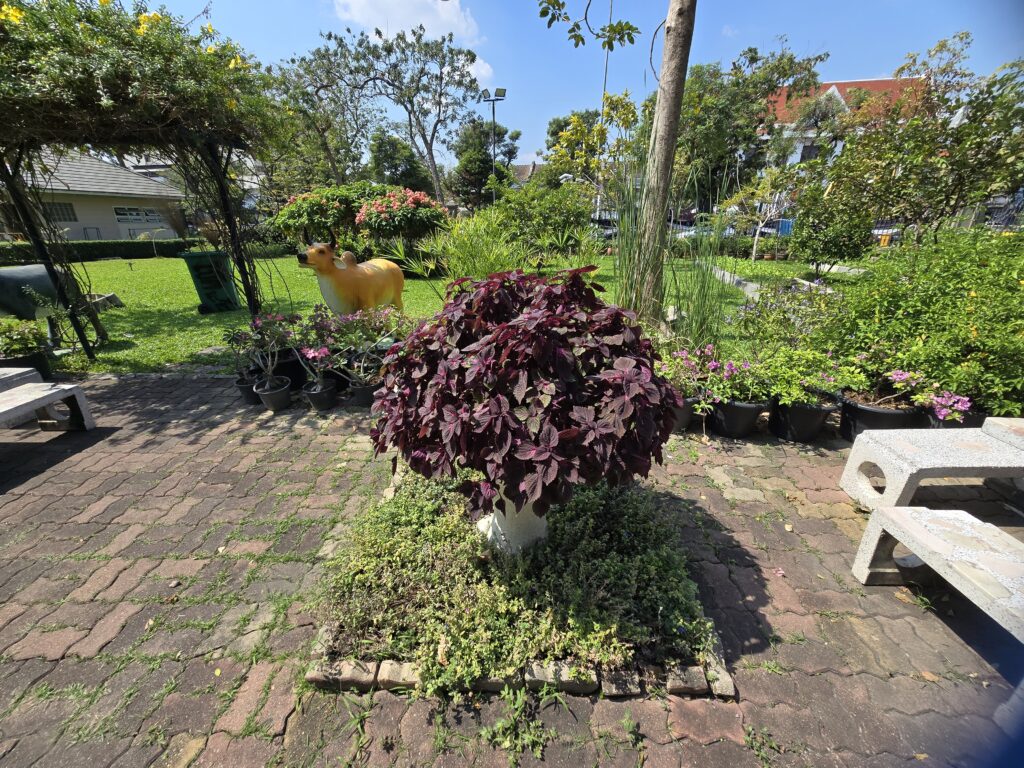
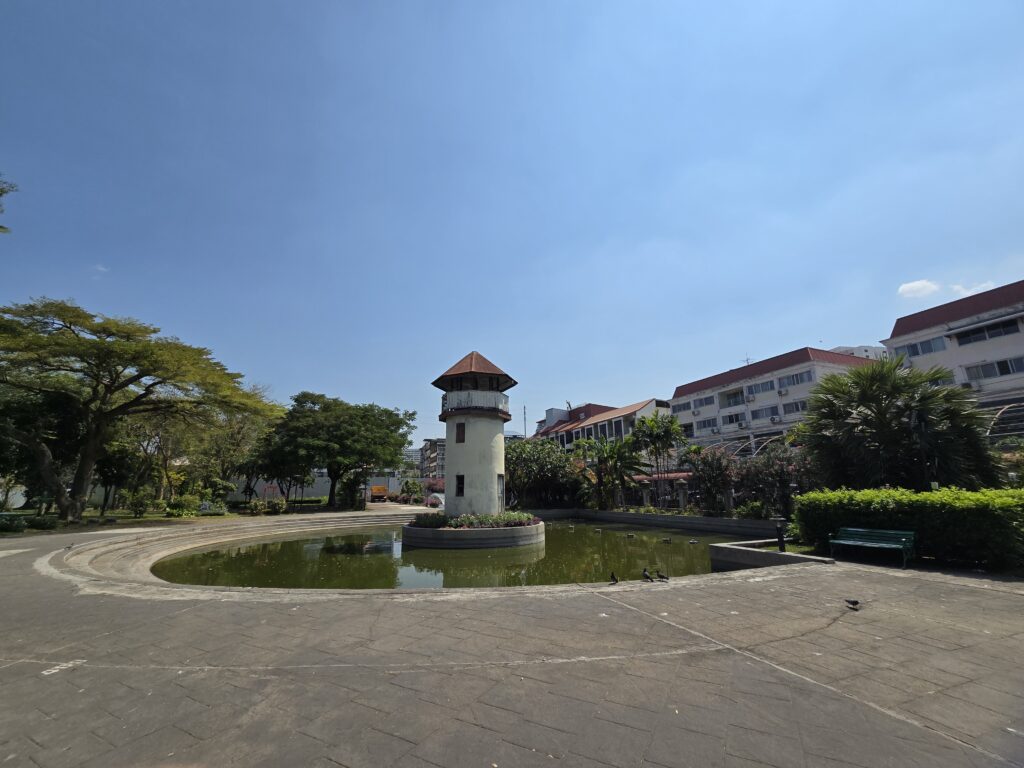
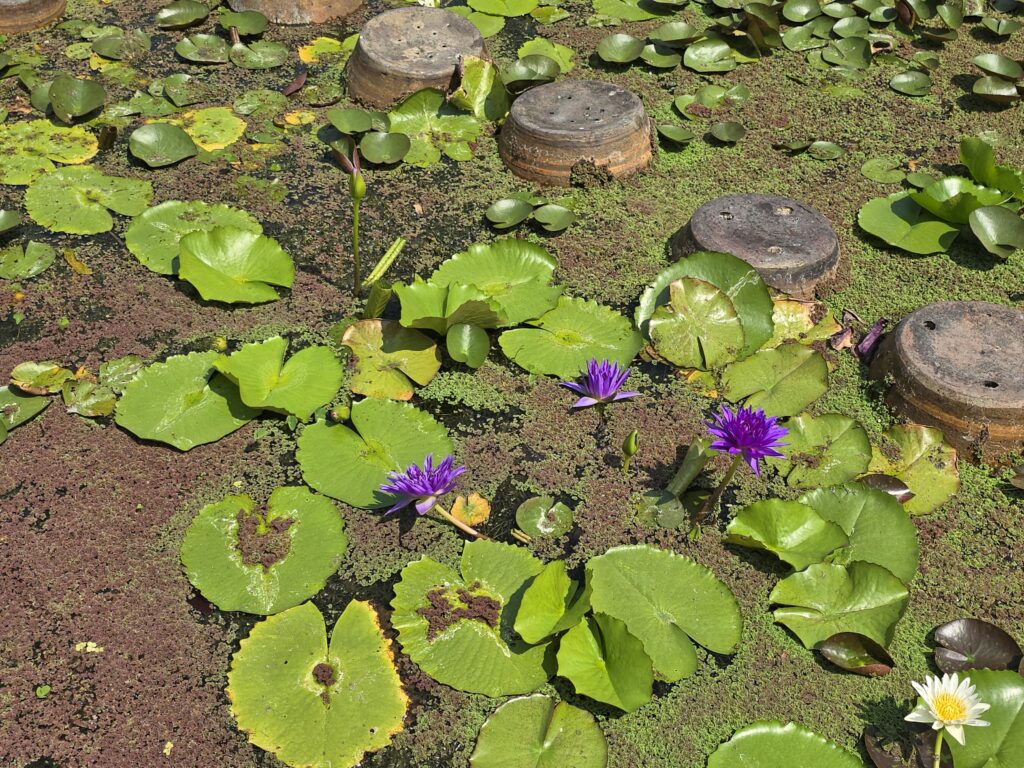
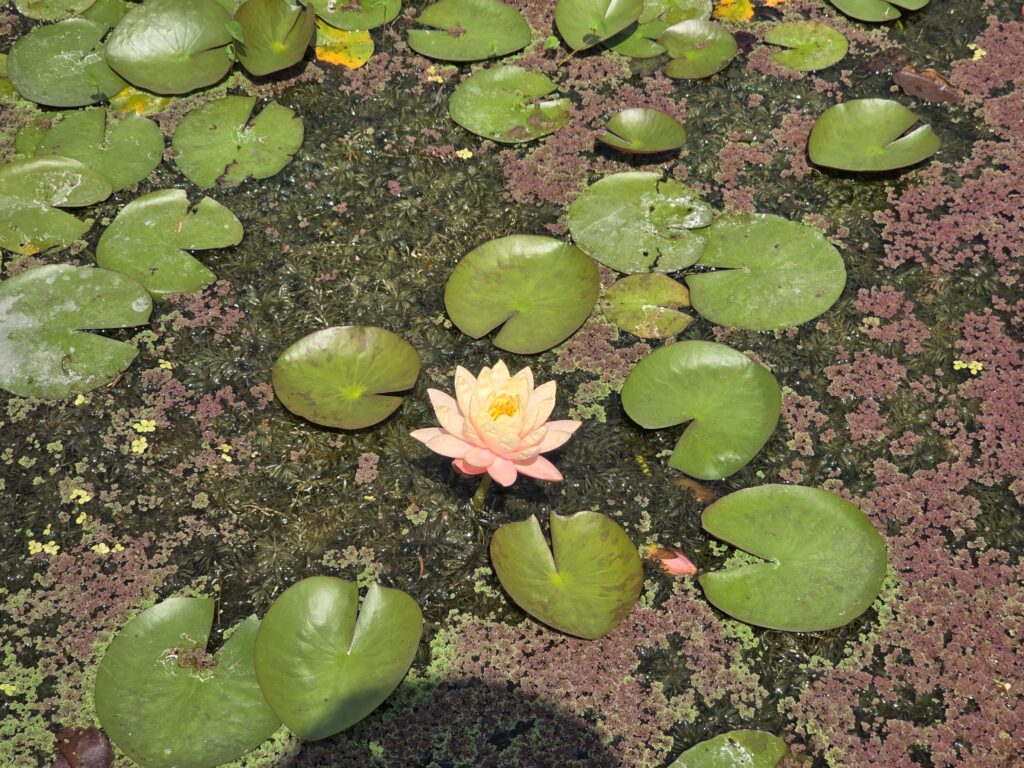
It’s Romani Park, a nice little park where people chill and read, because outside parks there are only cars, motos, dust, Sun, too much Sun (even though I love Sun).
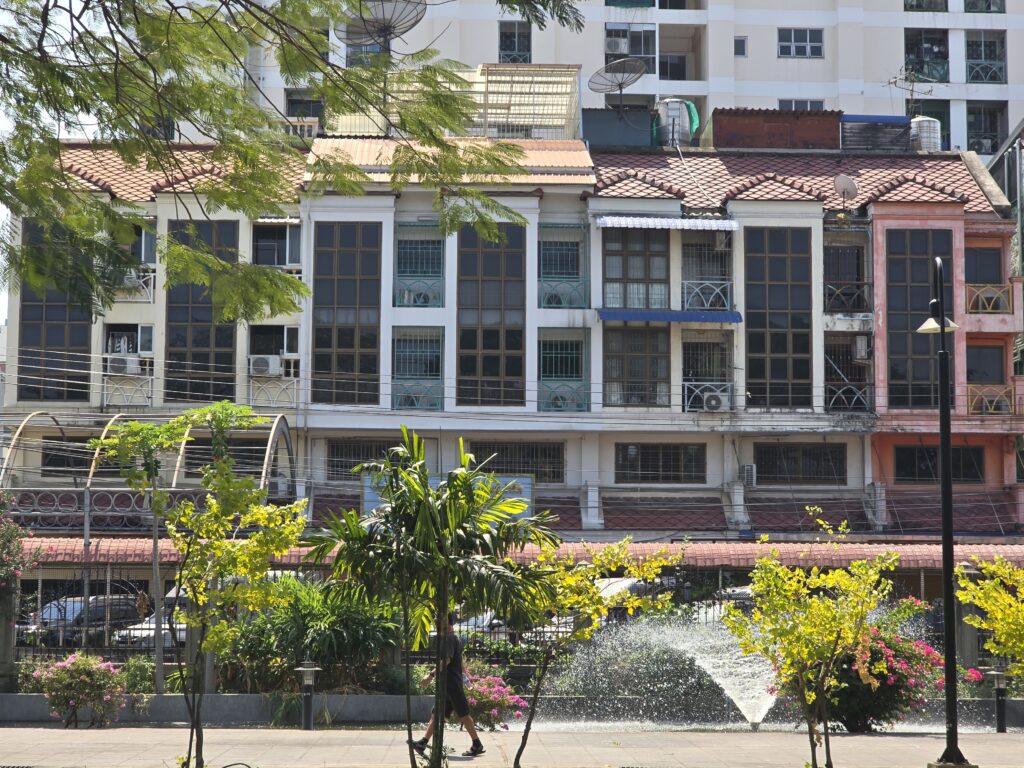
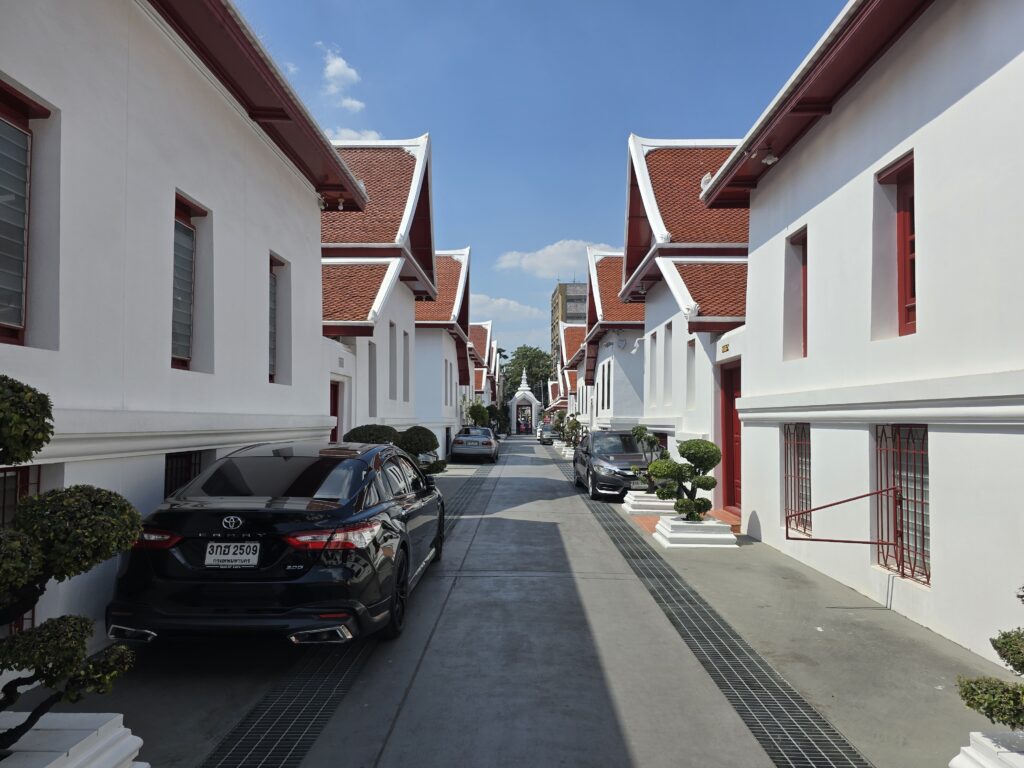
In Thailand, there is a tradition for young men to temporarily become monks, for example, for one or two months. It seems these are their monastic quarters, situated near the Luang Pho Klalfin temple.
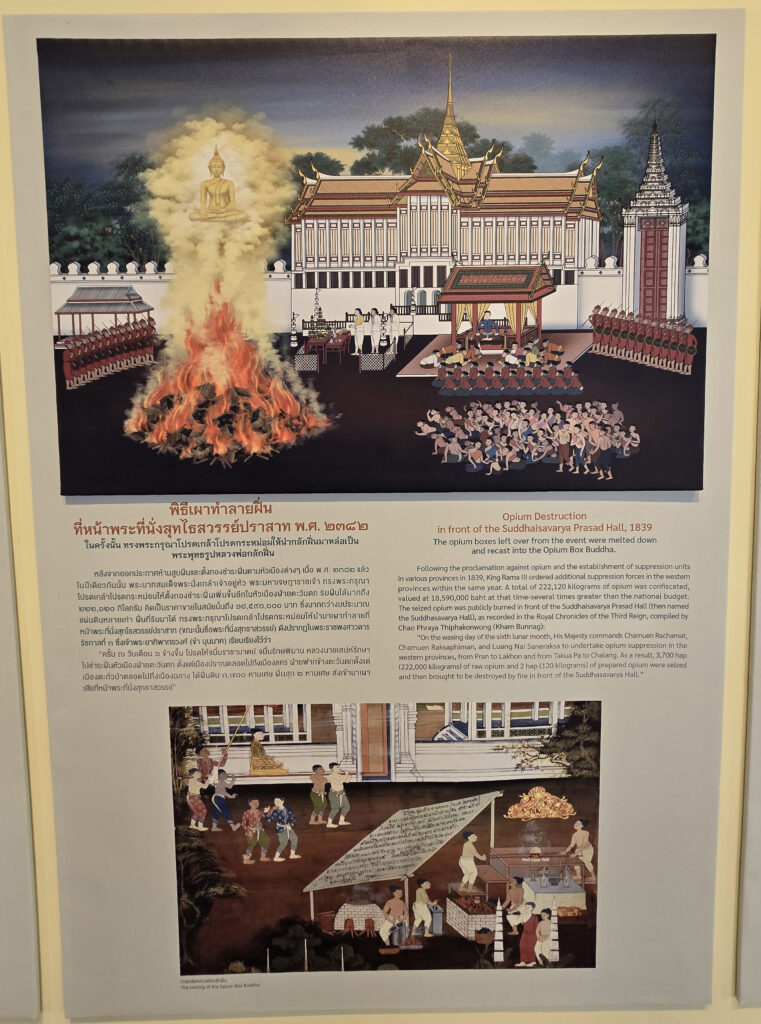
Below is the Opium Box Buddha. Here is the story (the descriptions are those from the Temple of Opium Box Buddha):
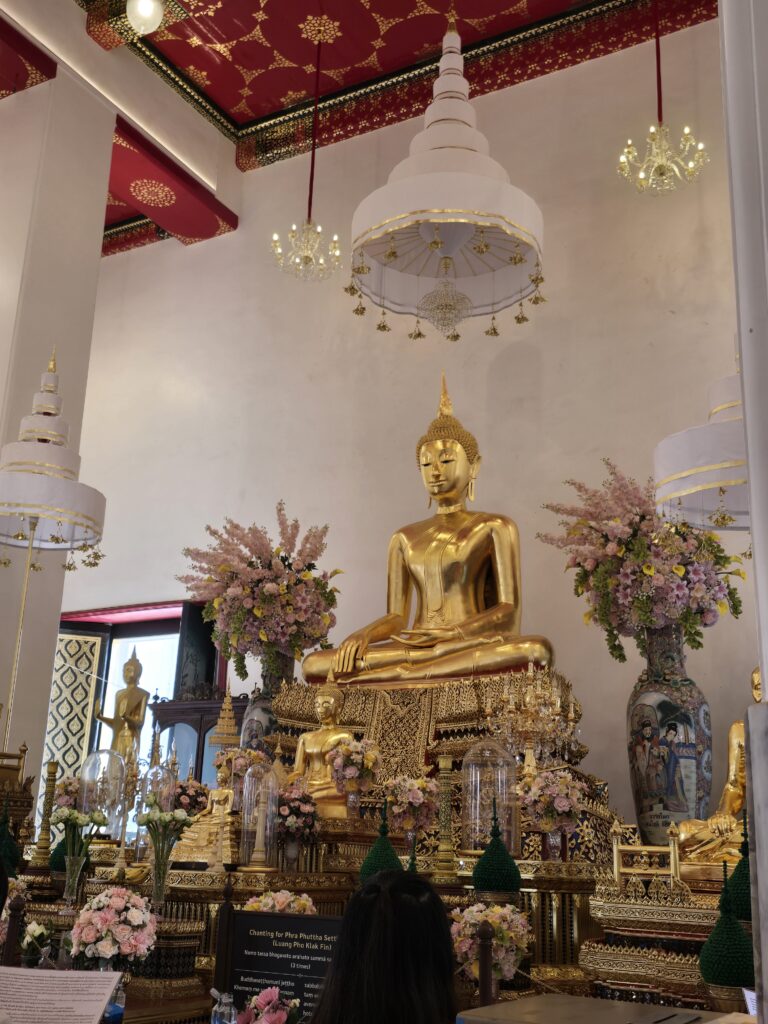
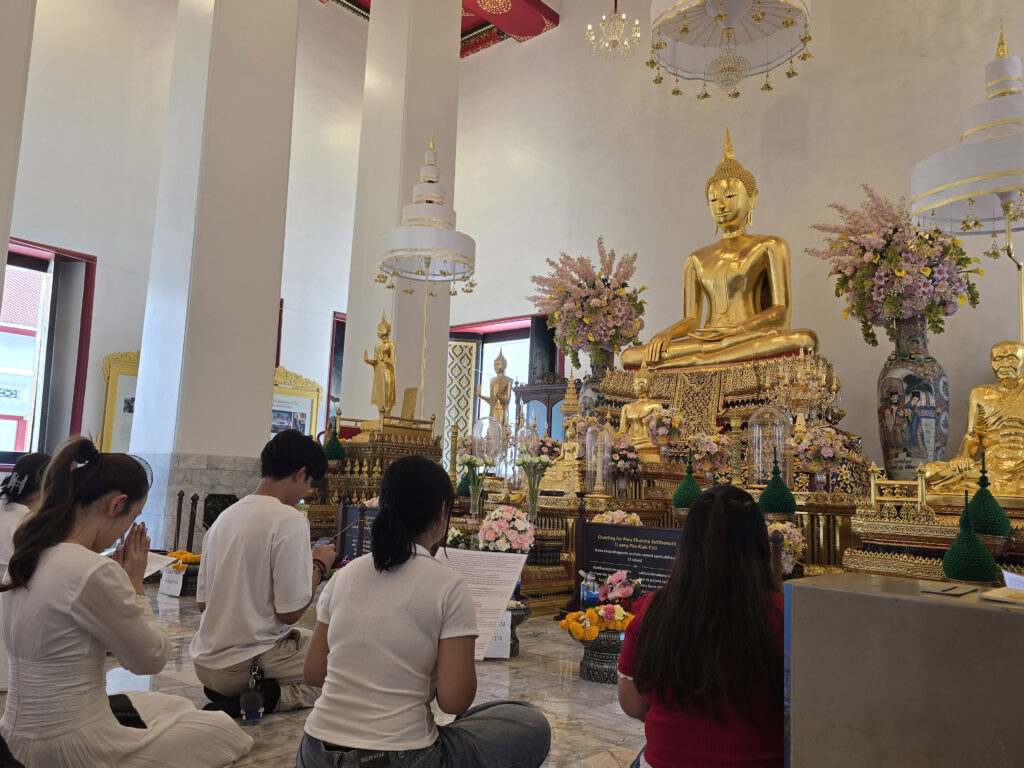
Pay attention to the mouse
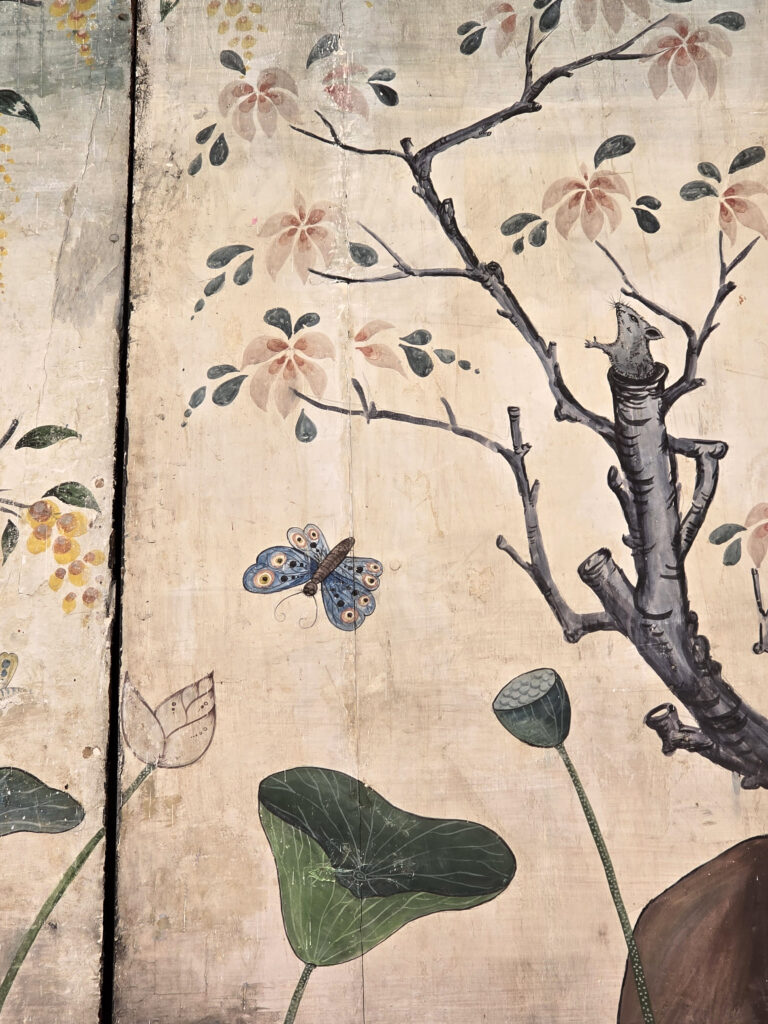
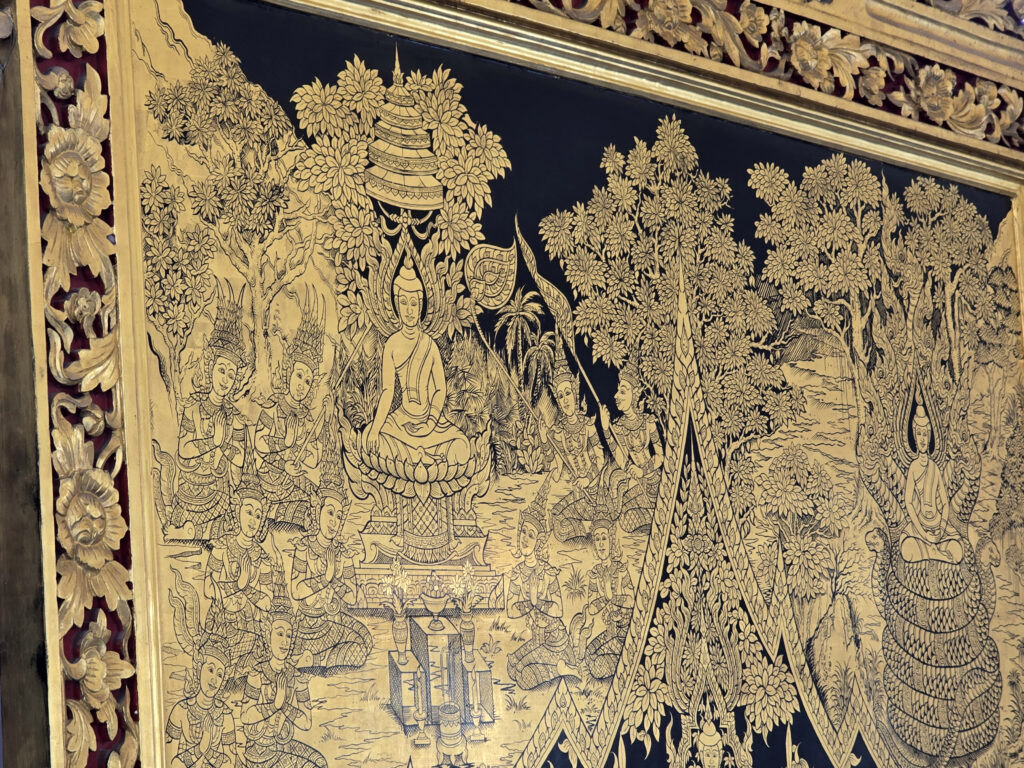
The engravings on the temple doors – I really love the combination of gold and black; by the way, black and silver are also very beautiful. People were praying in the temple, so it felt uncomfortable to take photos, but those drawings are so stunning. Soon I’m going to the national museum; there, I’ll definitely take plenty of photos of incredible beauties.
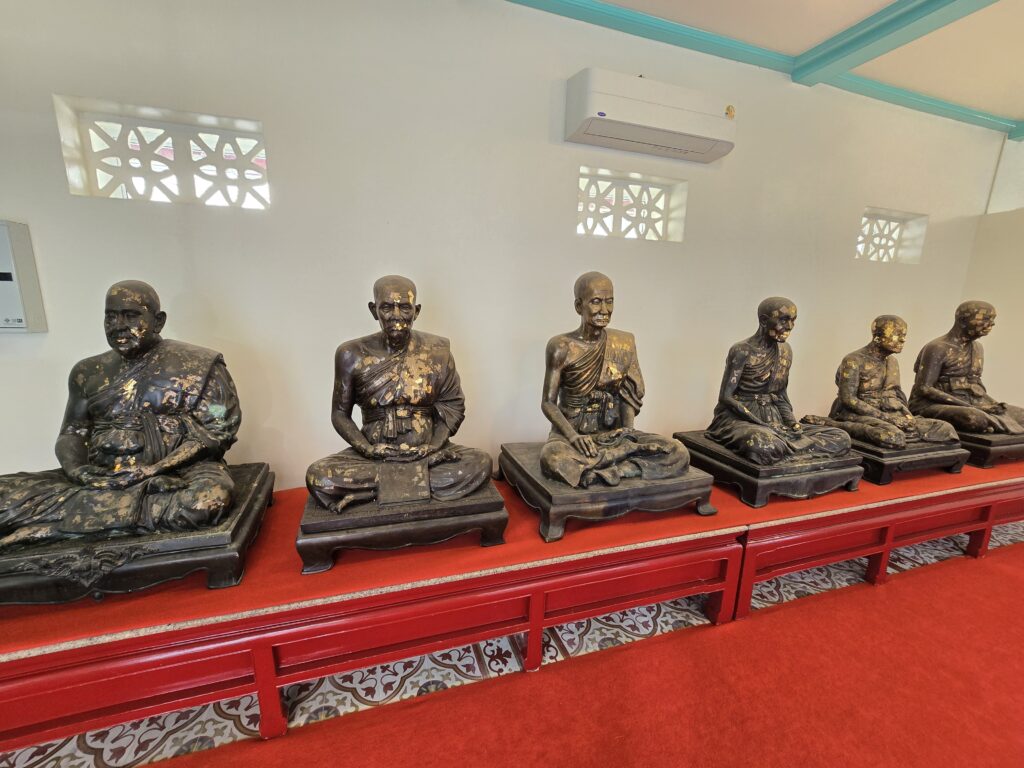
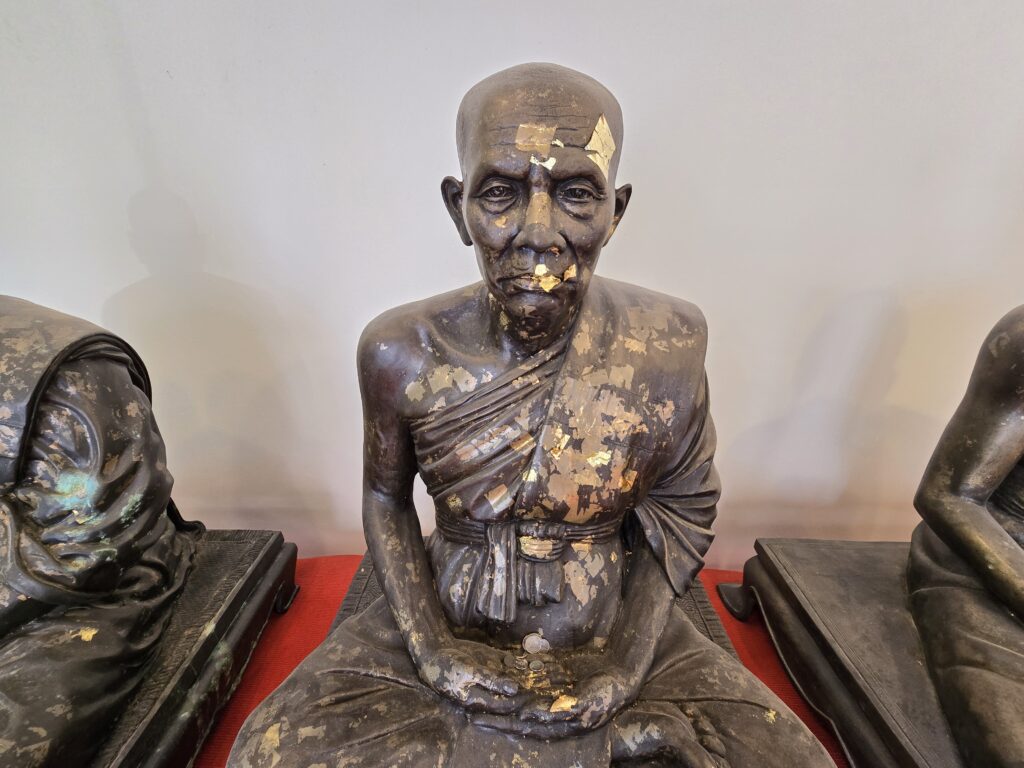
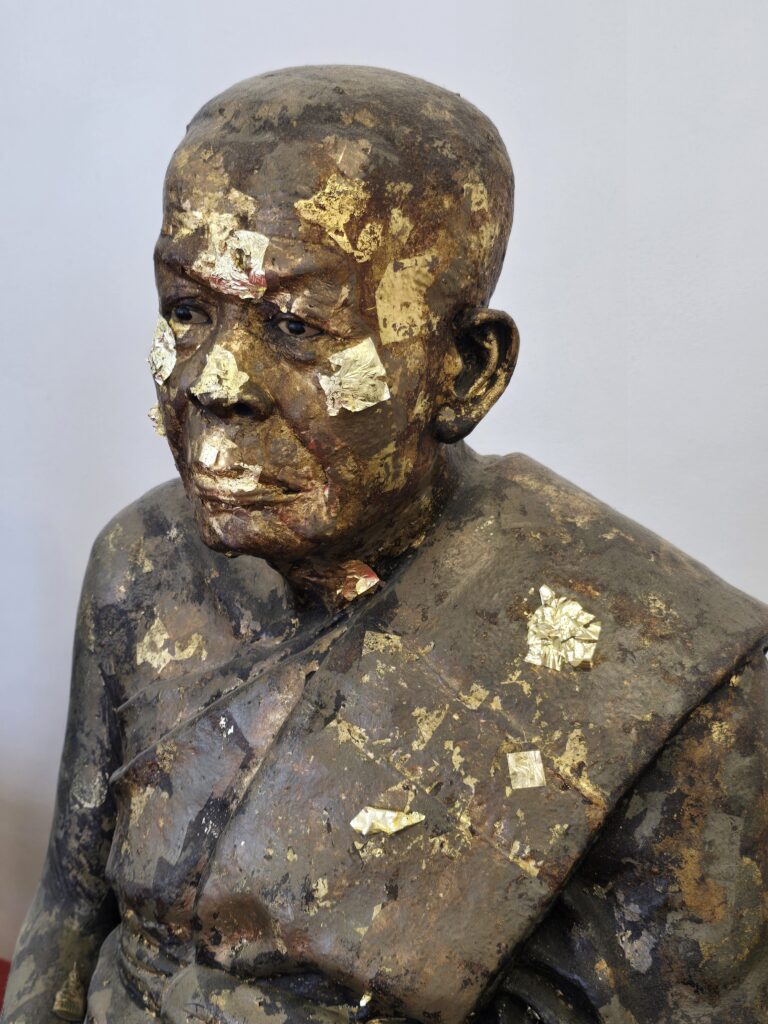
Apparently, these are statues of revered monks. As a sign of respect, people affix small squares of gold leaf to them. Judging by their appearance, it is most often applied to the mouth area.
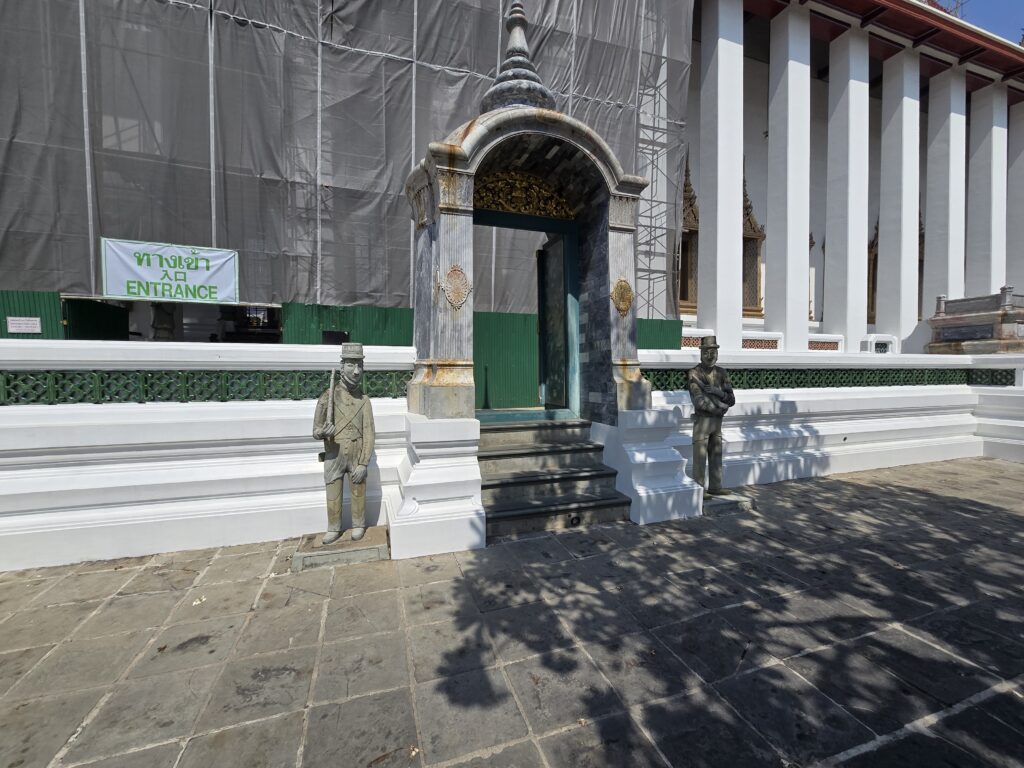
Just 10 meters away, there is another temple, which is guarded by these friendly-looking guards. How adorable they are! Their bodies look so relaxed, cartoonish. They are holding some kind of rifles, but they are smiling. Who on earth came up with something like this?
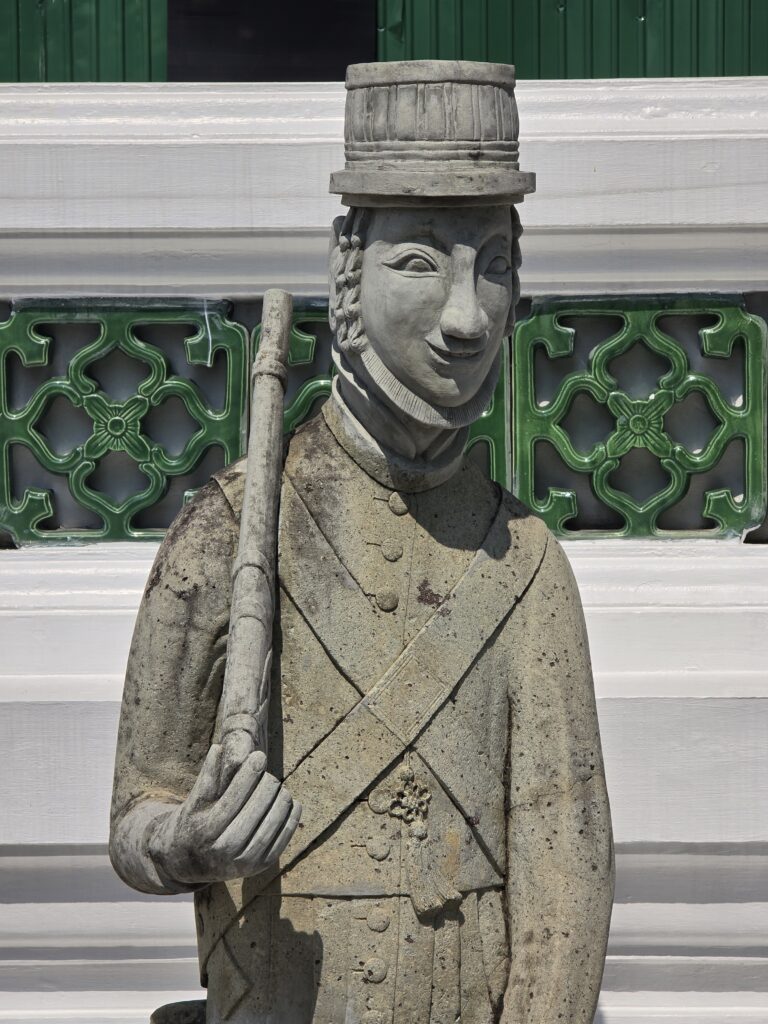
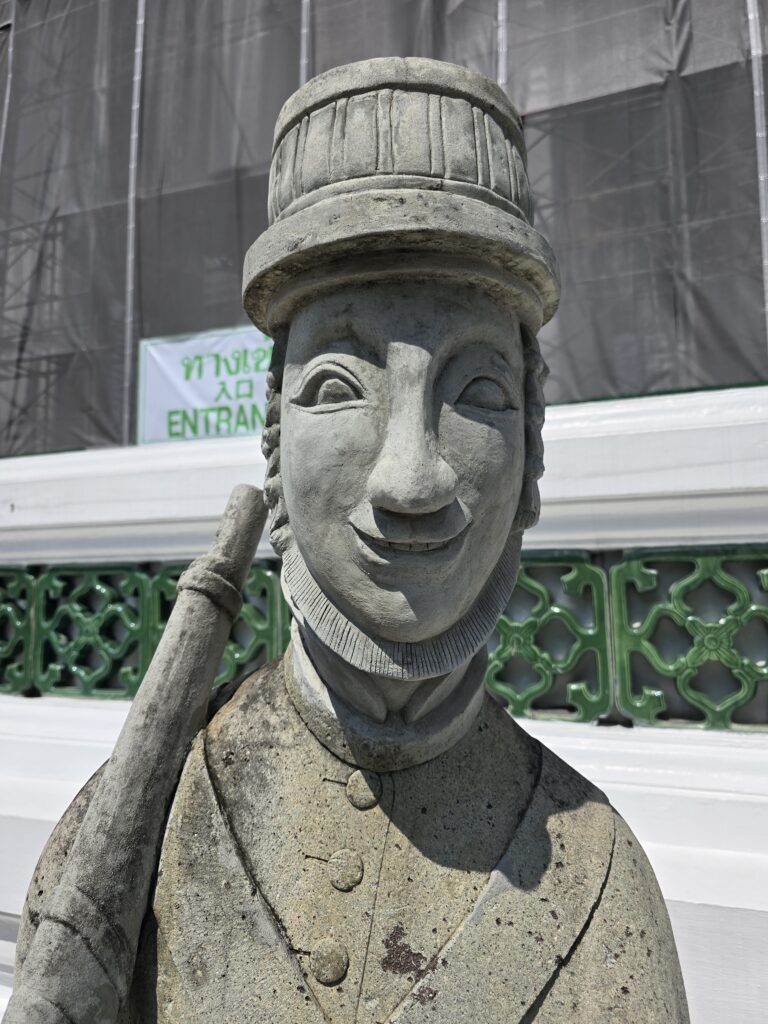
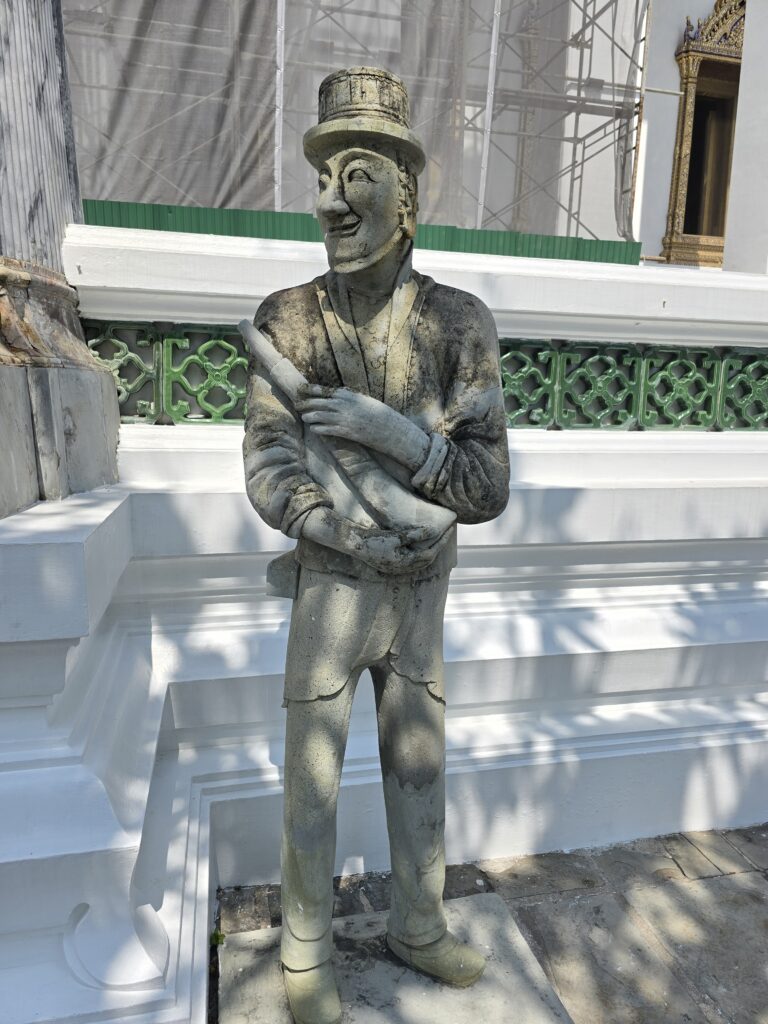
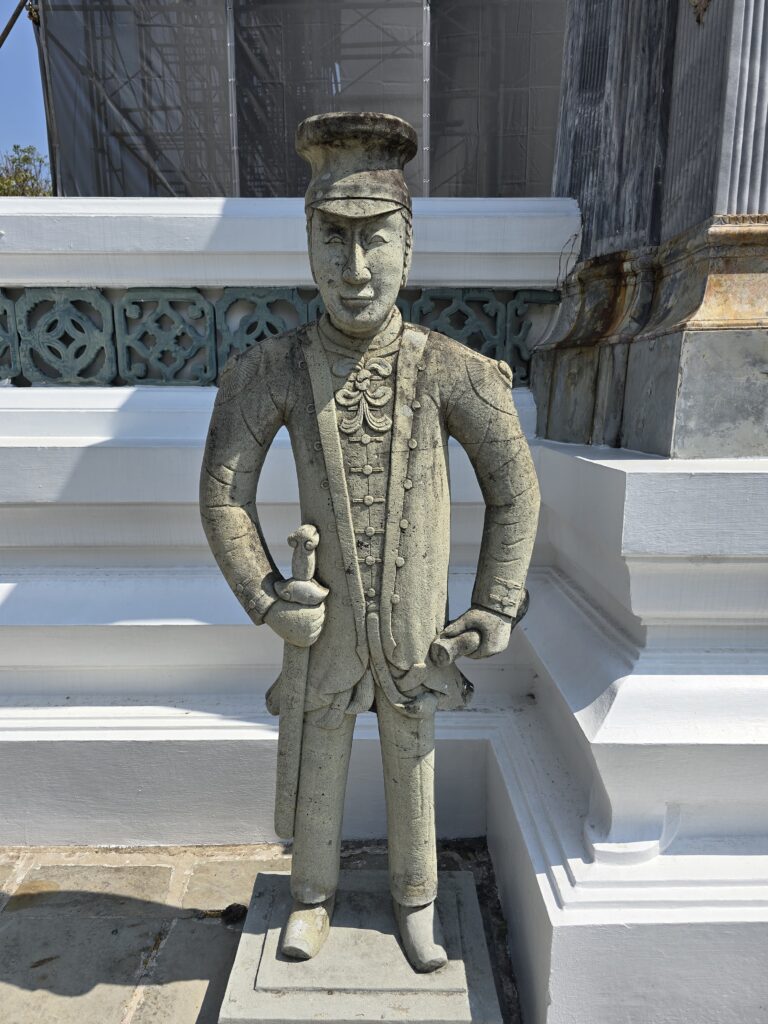
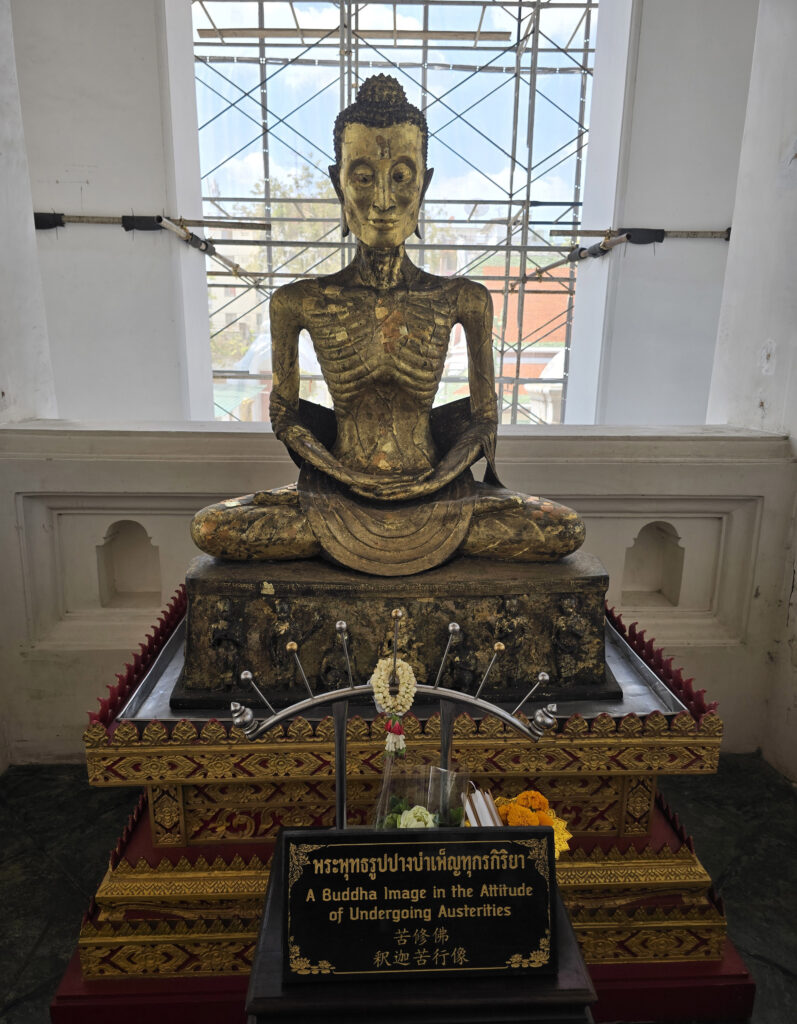
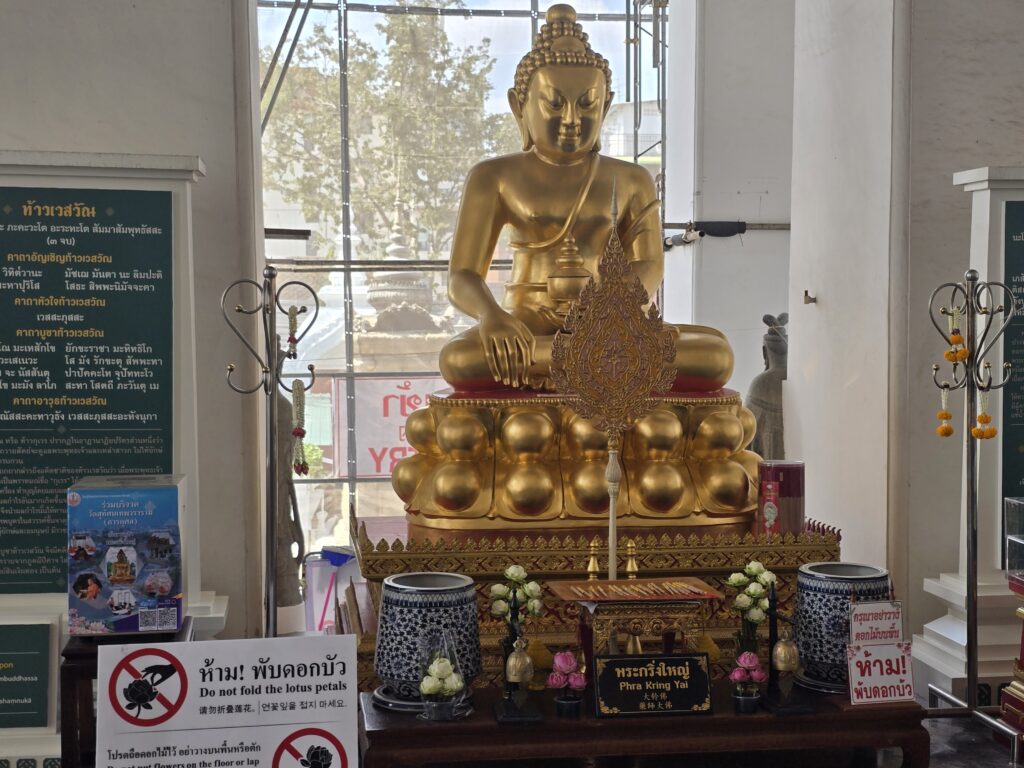
The Buddhas in this temple (Phra Ubosot Wat Suthat)
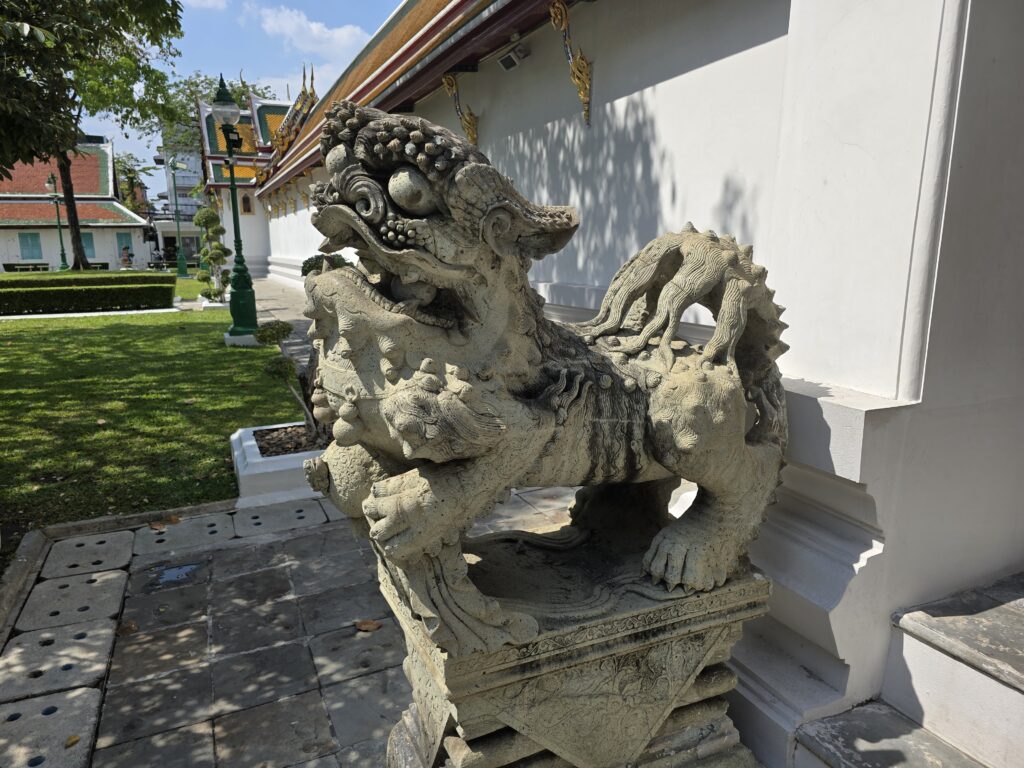
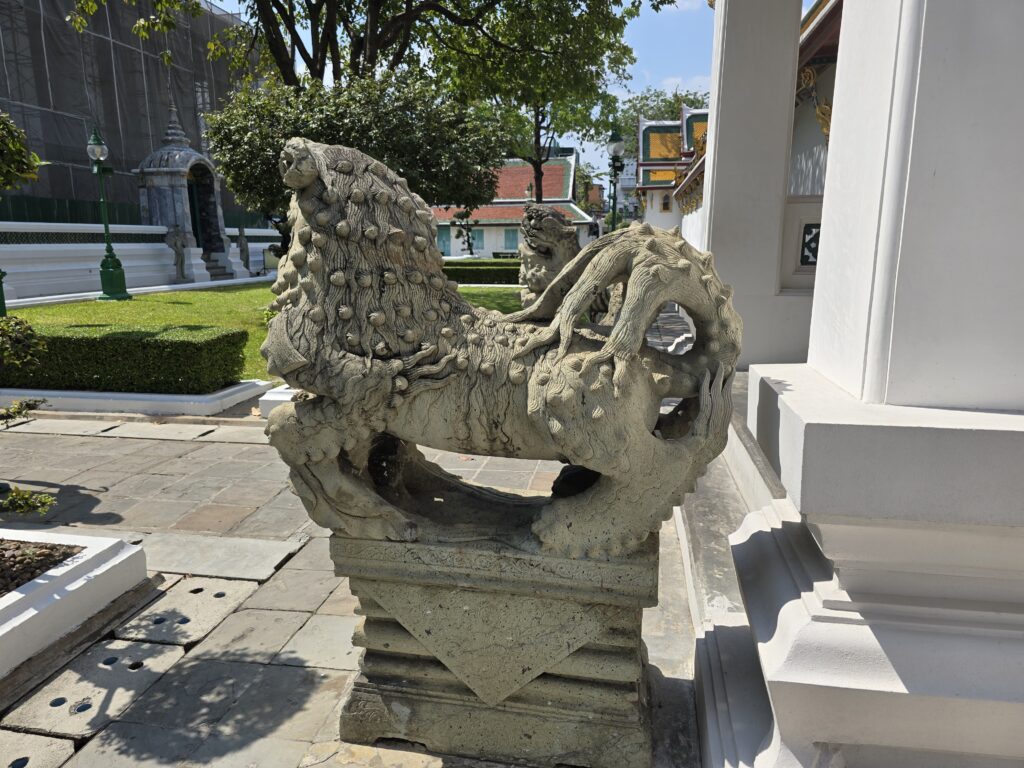
The guards at the next temple are also amazing. Or perhaps they are not guards, but greeters. They look like fantastic creatures with bushy tails.
Around the perimeter of the temple, there is an uncountable number of Buddhas. Some of them are golden, others are black because they have not yet been covered with gold. I saw one master craftsman at work, but I felt too shy to take a photo. I need to stop being shy and try to talk to people (maybe in the next life).
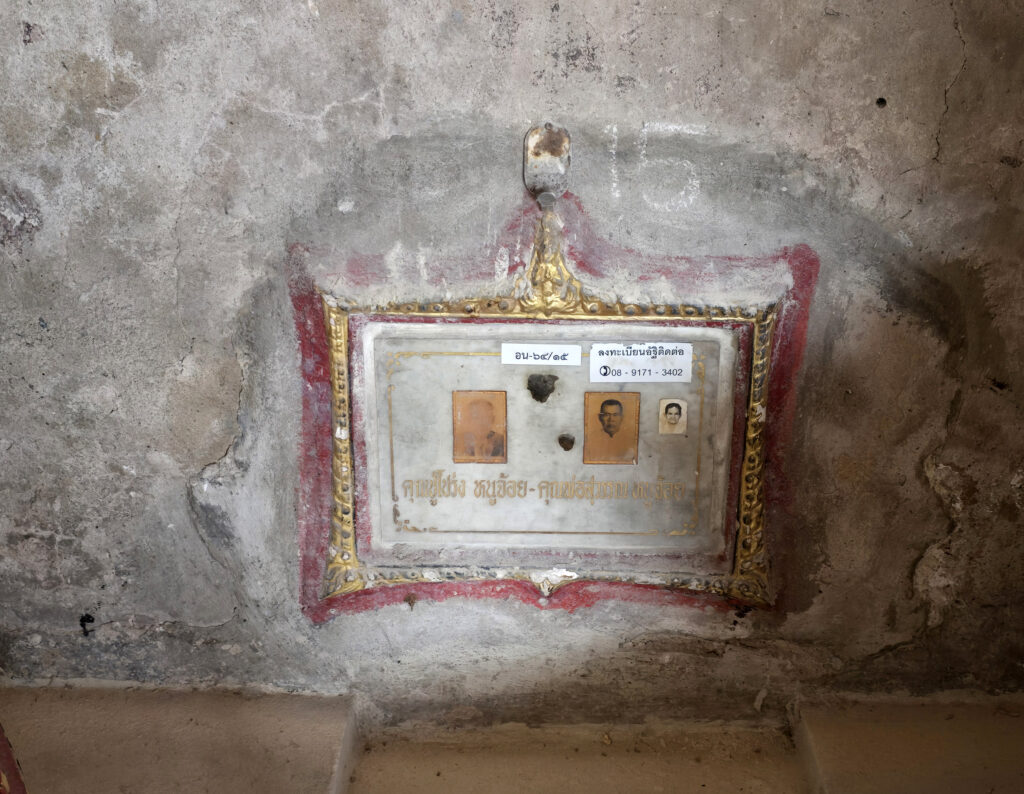
Actually, it seems to me like a crematorium, because between the Buddhas there are what look like doors that open, presumably for urns, and they have names written and photographs pasted on them. Probably a crematorium for revered monks.
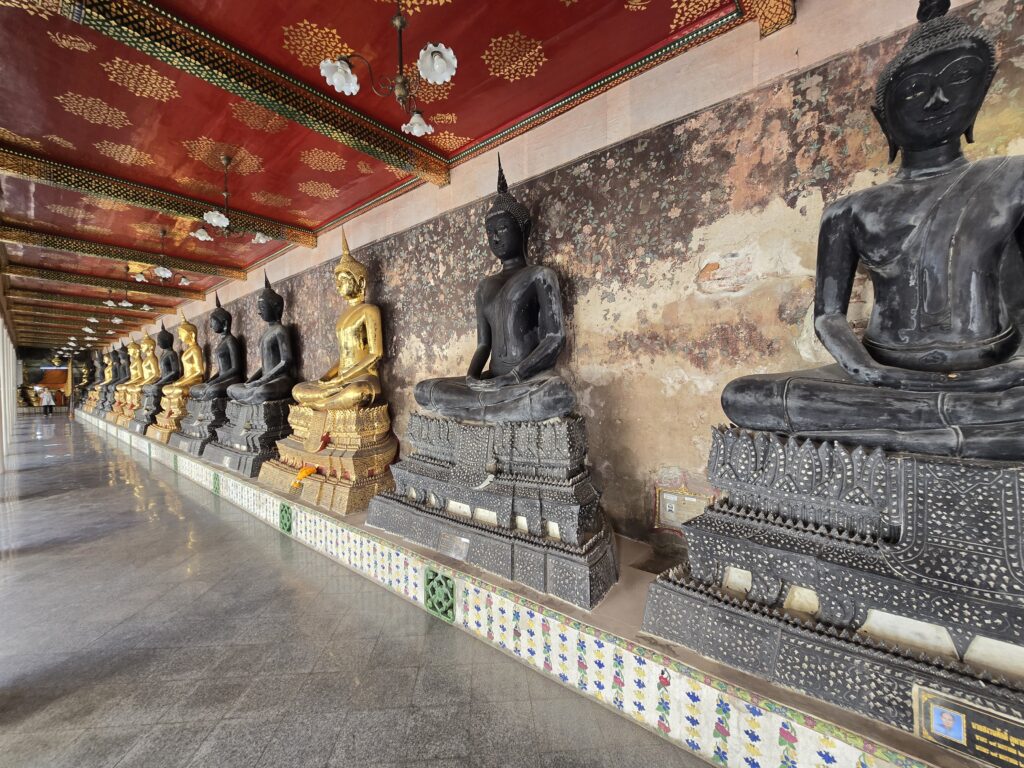
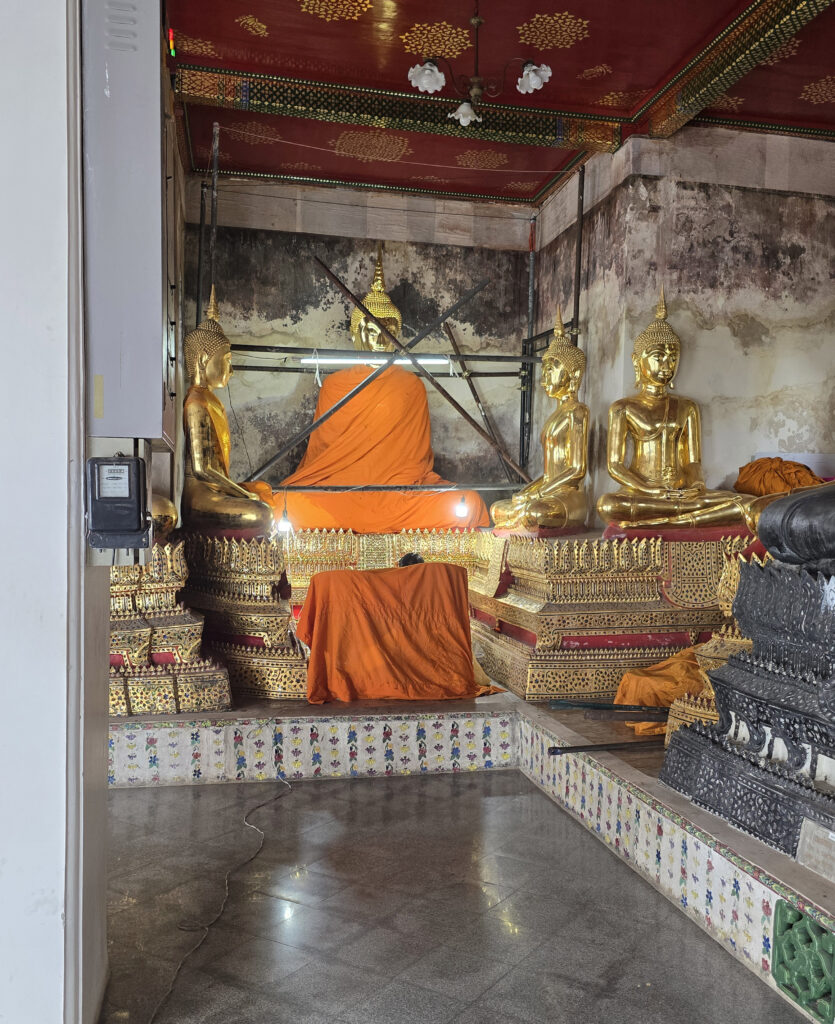
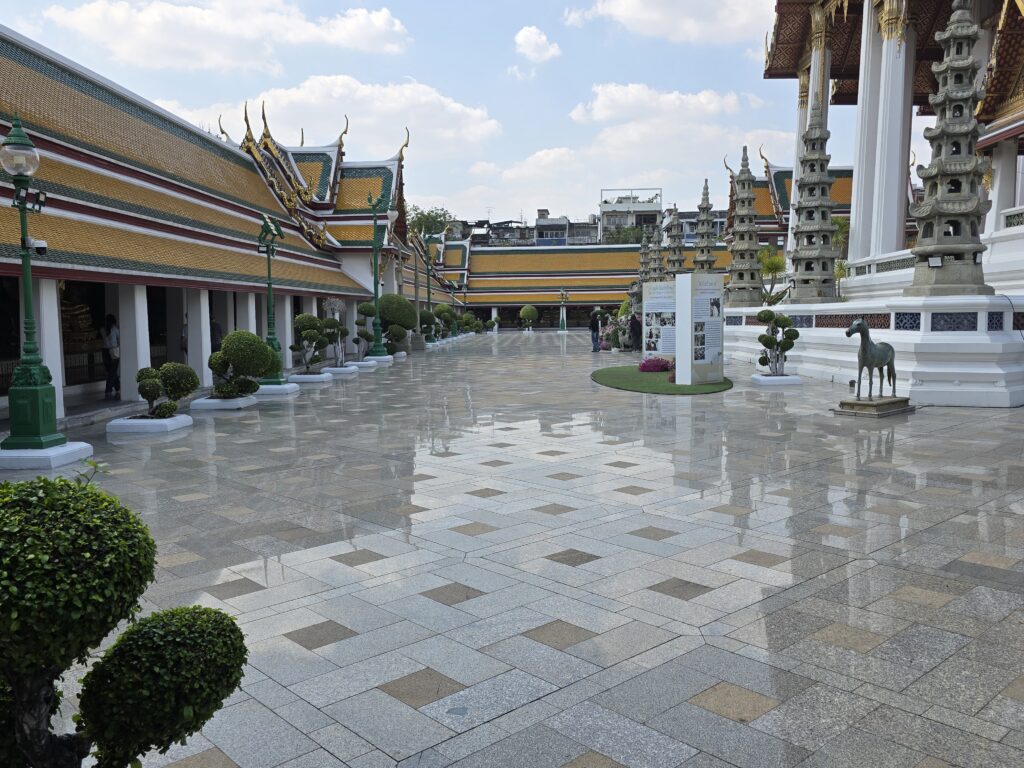
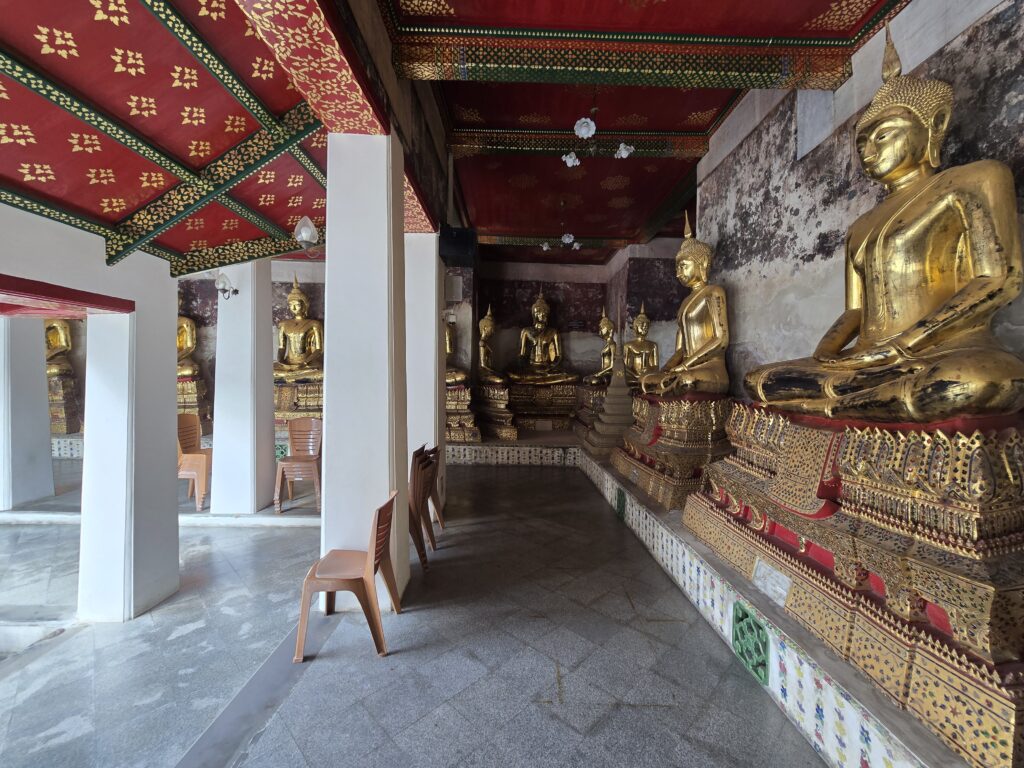
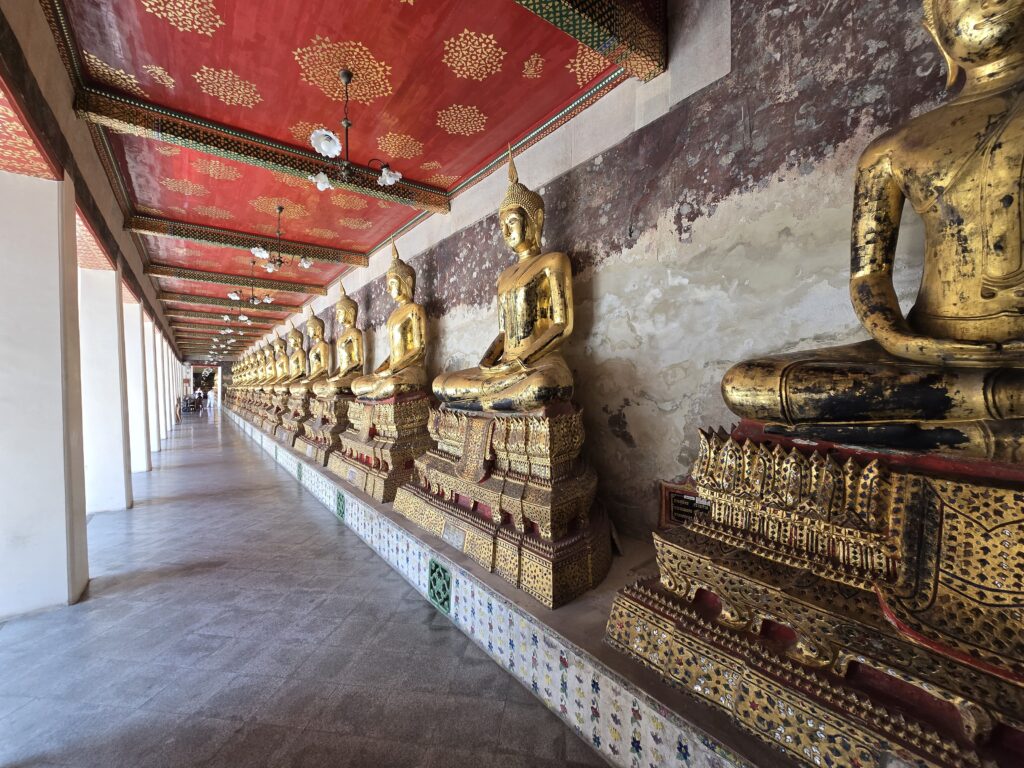
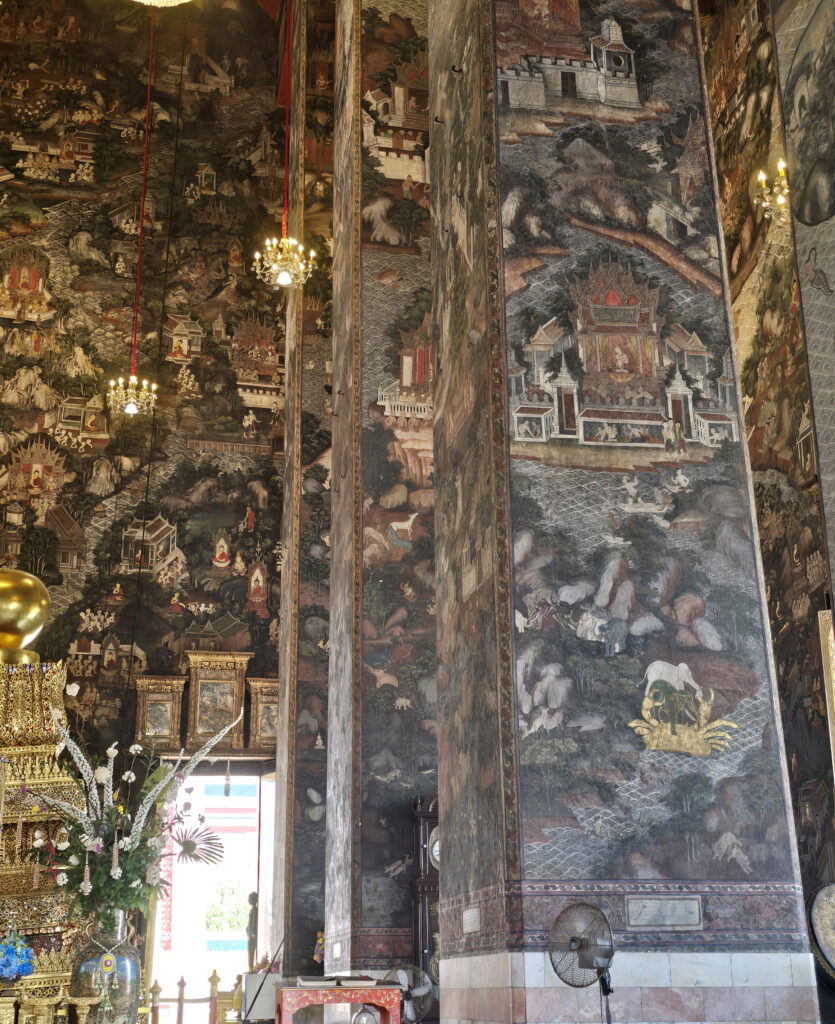
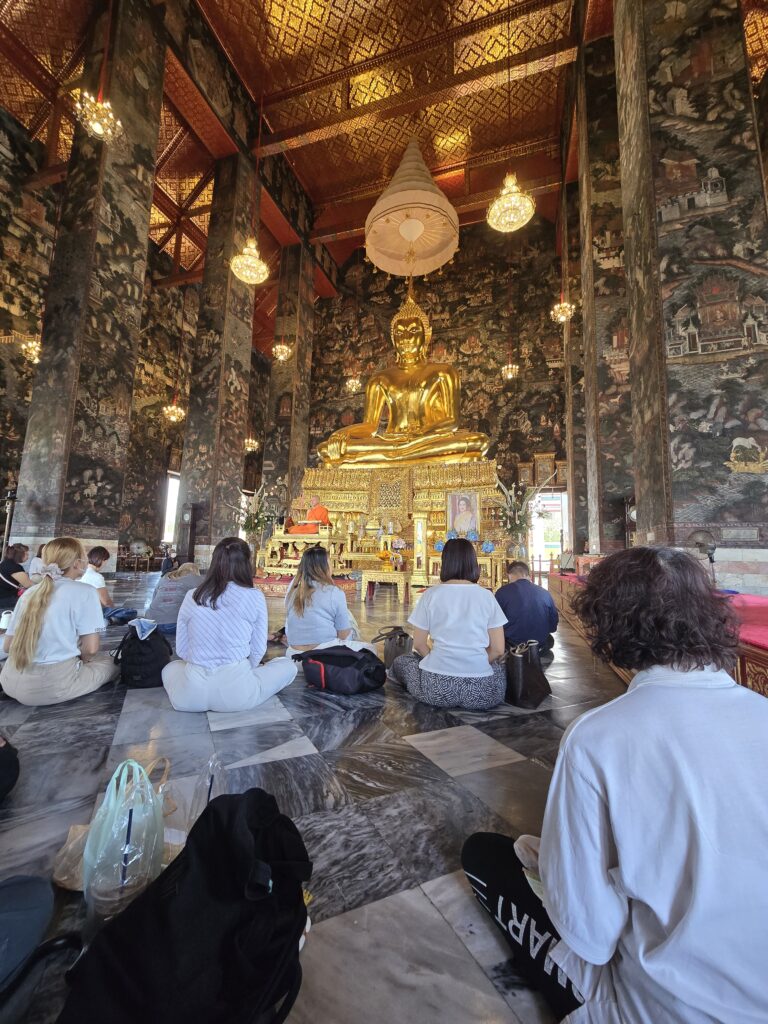
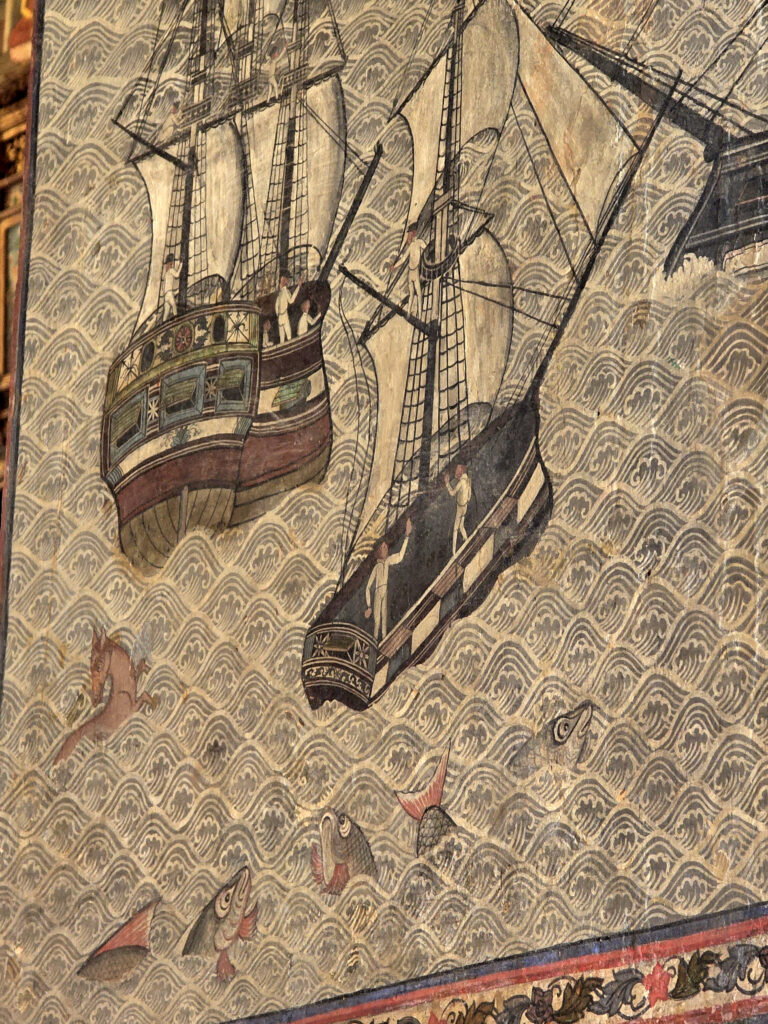
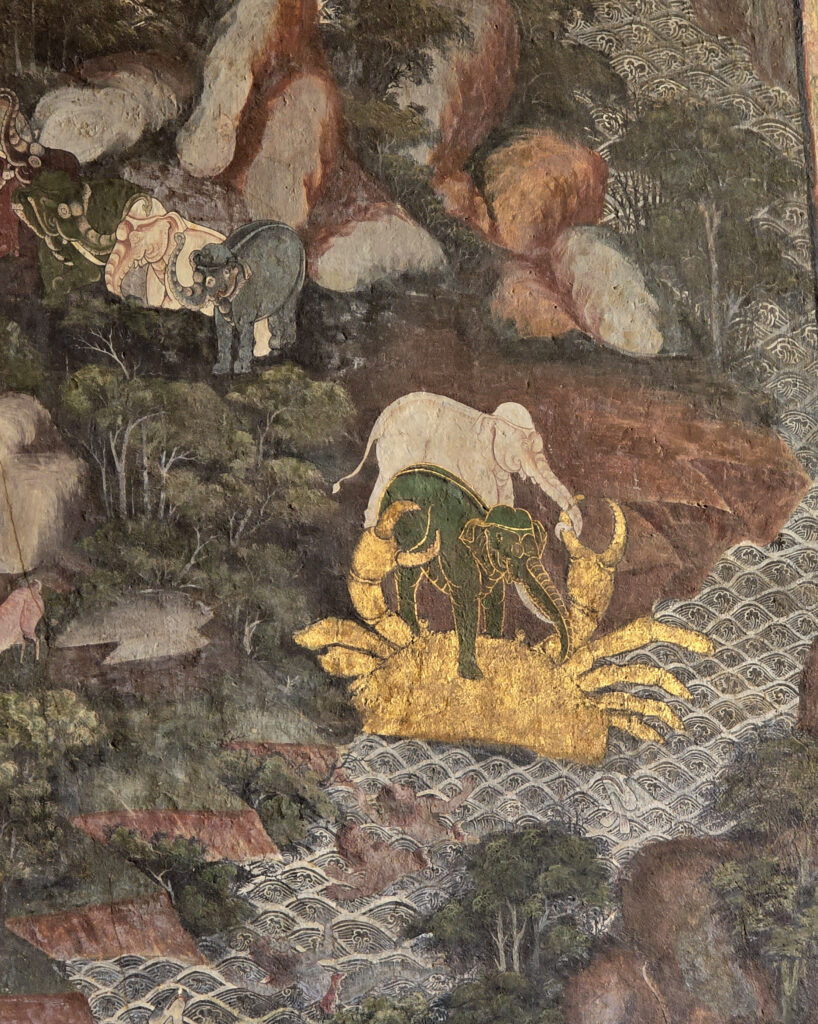
The temple itself, Wat Suthat Thepwararam, is a large hall with a huge golden Buddha in the center, and all the walls are painted with scenes from his adventures. I would love to study it all in detail. From where I was sitting, I could see elephants walking on a crab by the riverbank and a horse swimming near ships. The stories depicted are evidently quite unconventional.
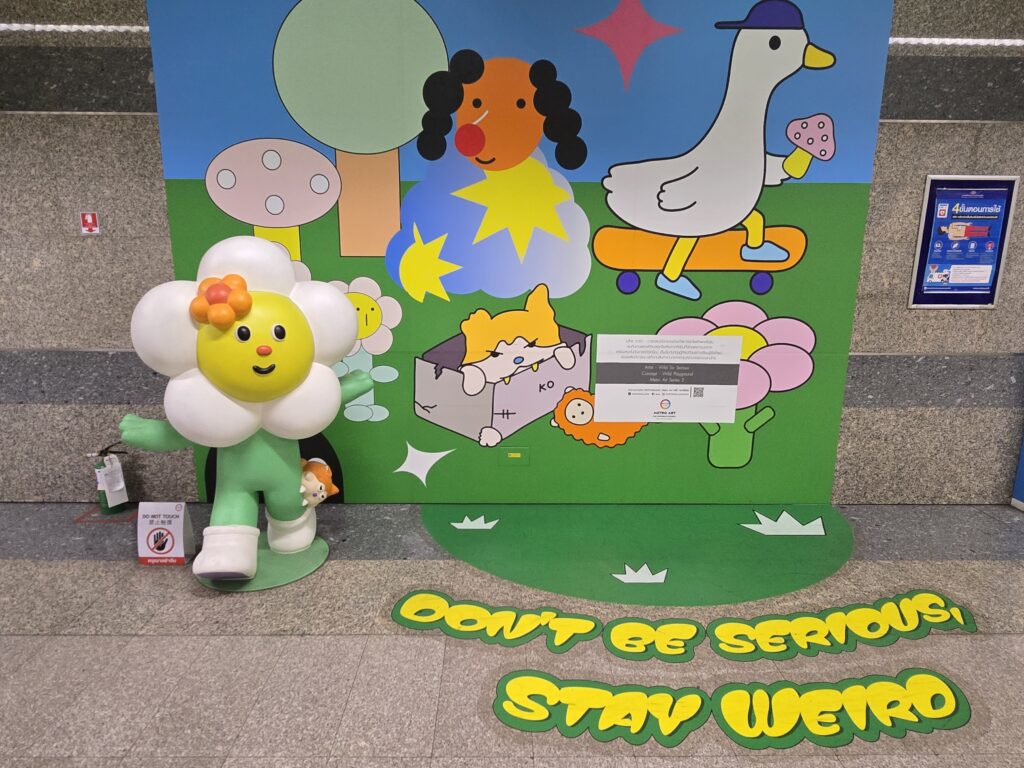
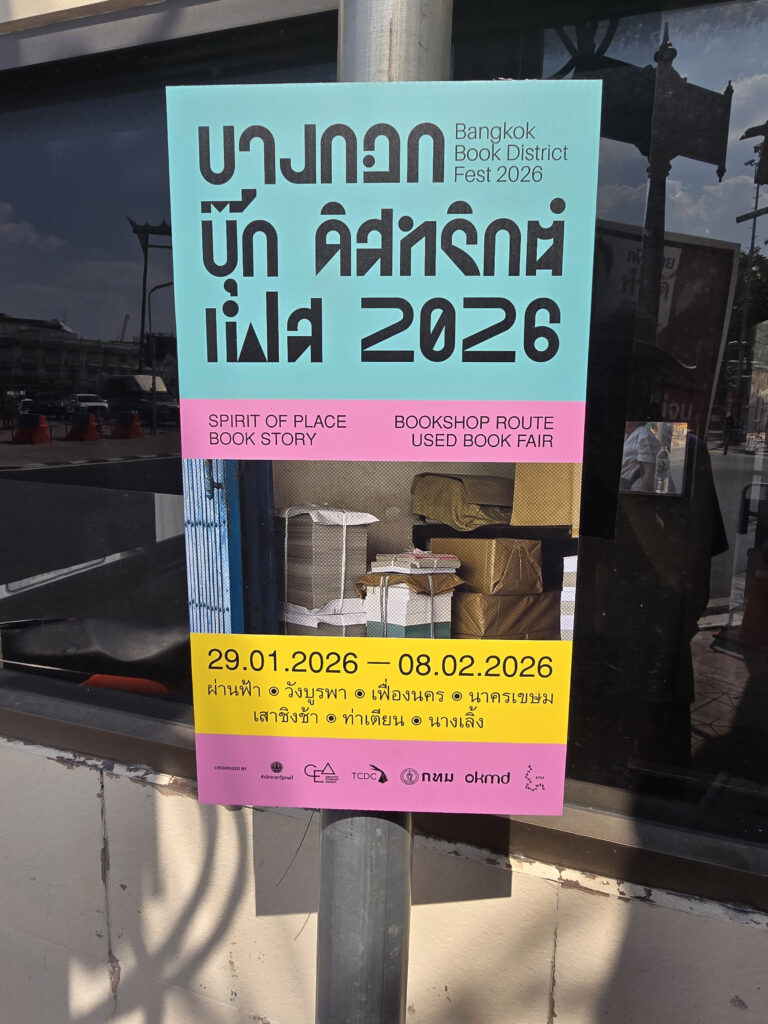
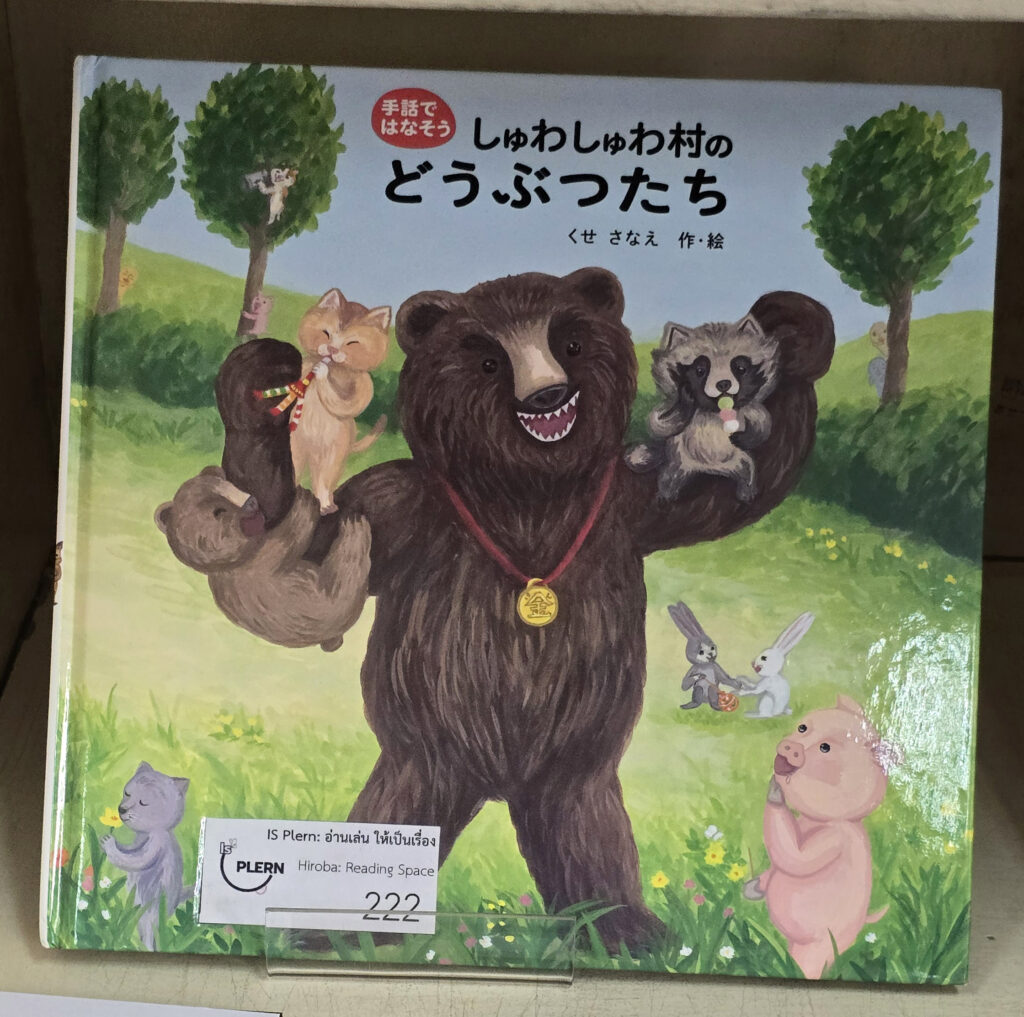
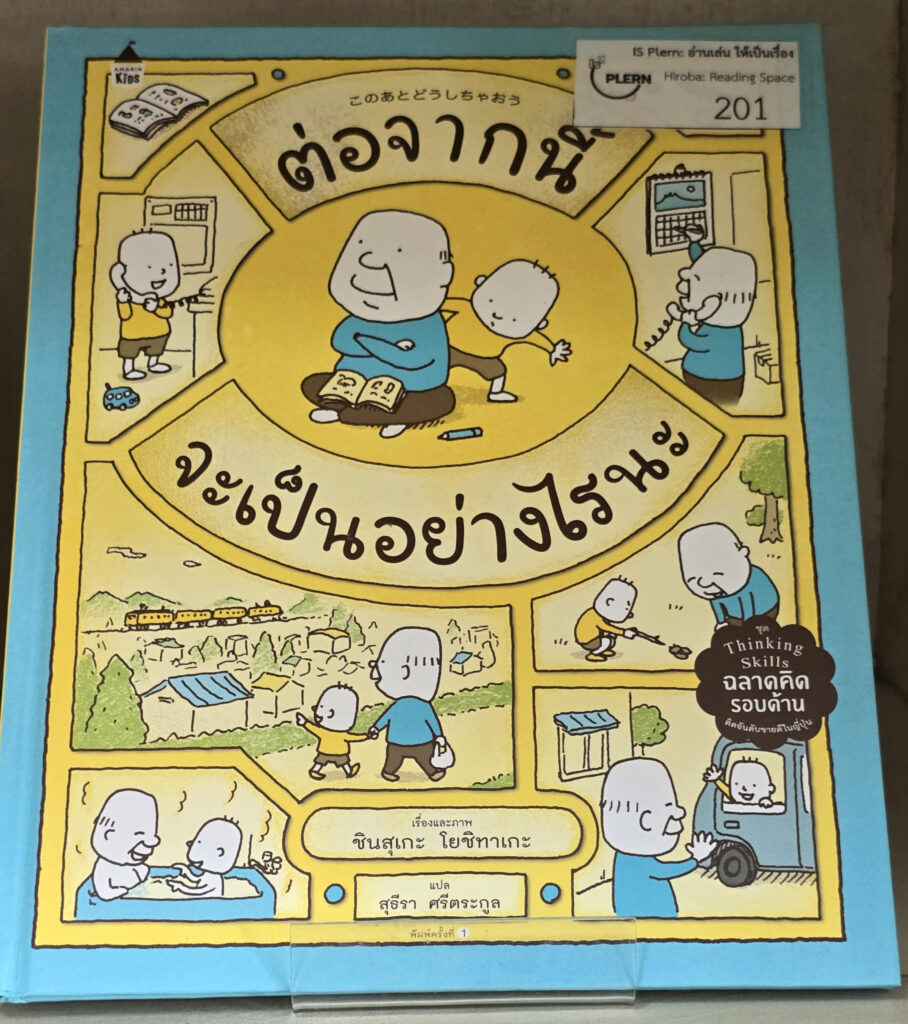
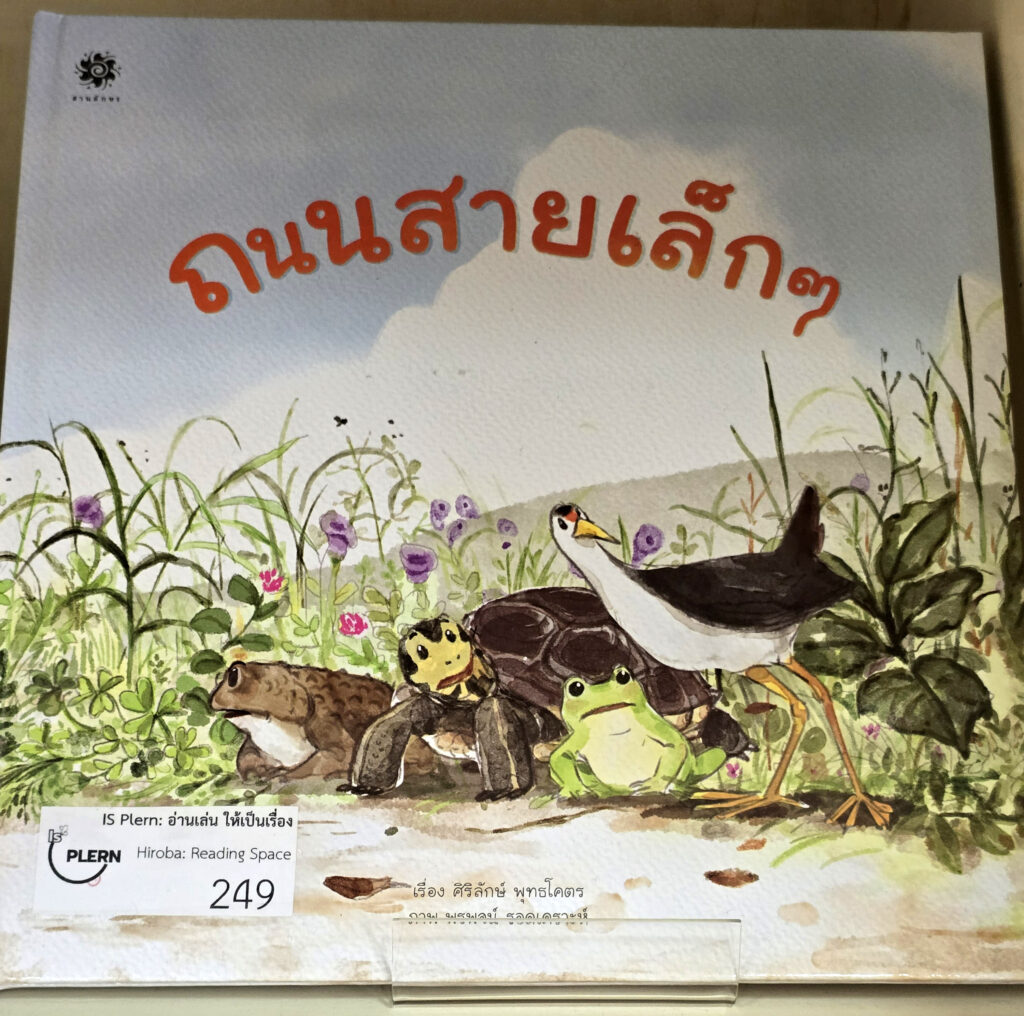
Outside, I saw that a design week and a book festival are currently taking place in Bangkok. I went into one of the venues, which had an exhibition about the beginnings of book printing in Thailand and what’s happening now. I haven’t really delved into the details yet, as I plan to visit their other locations. But I did take some photos of some children’s books.
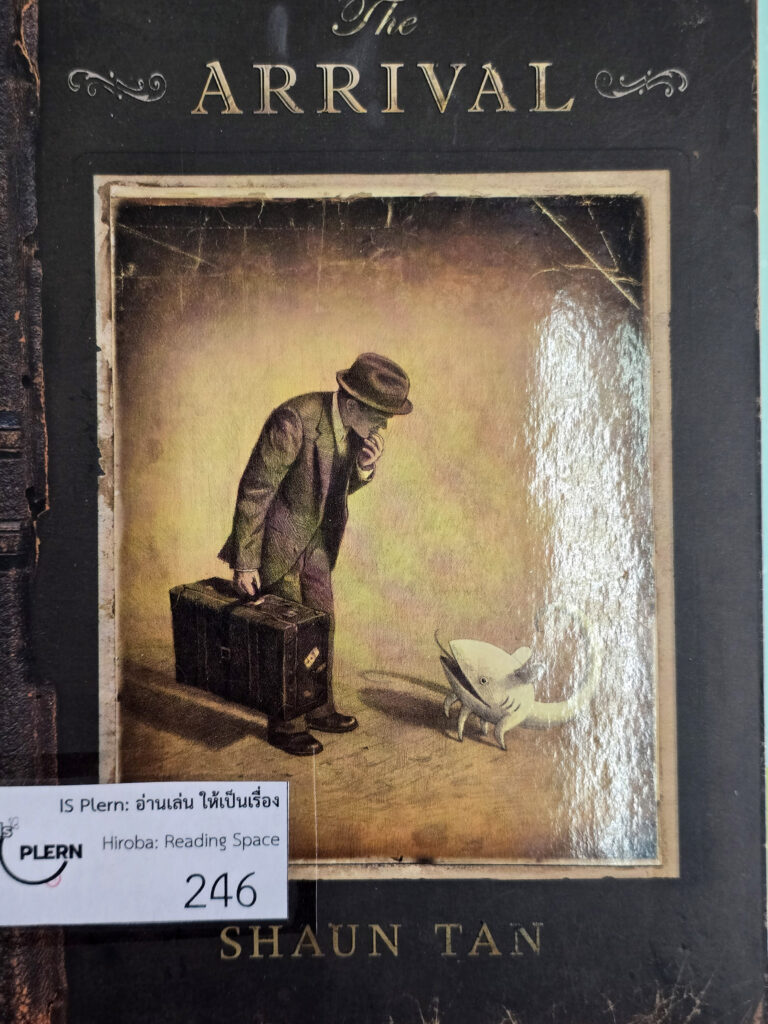
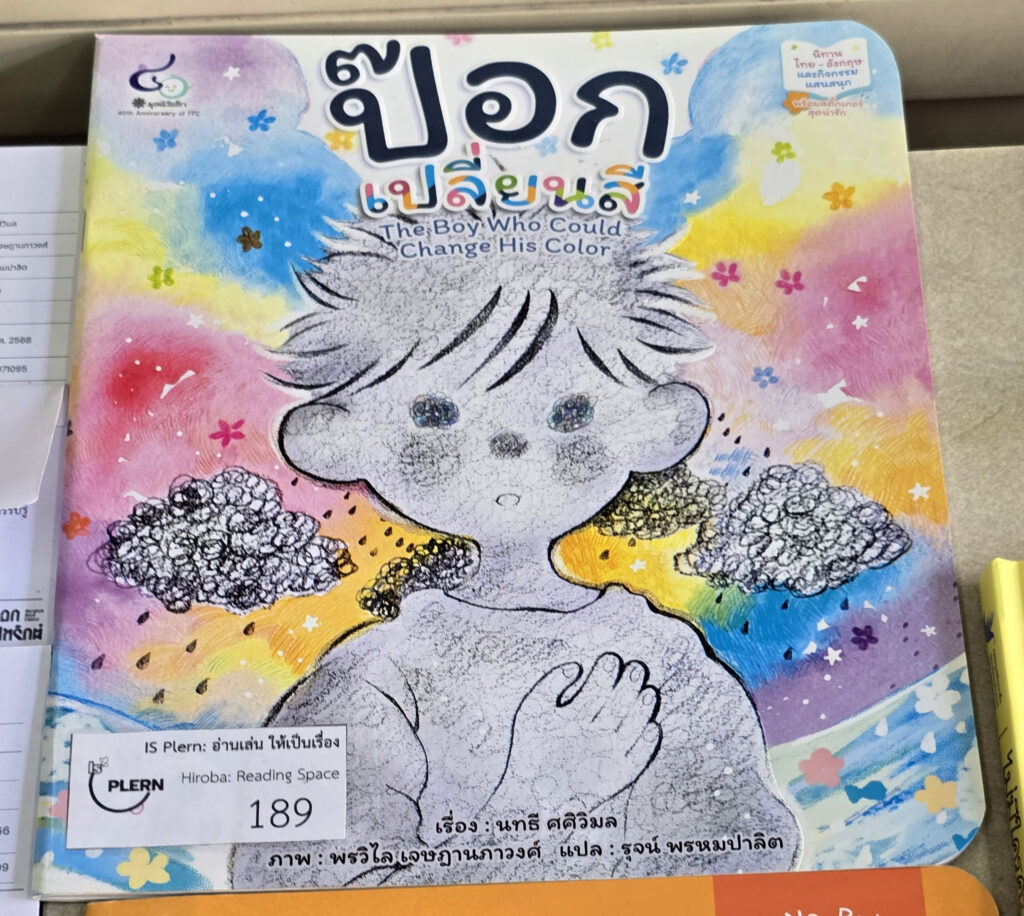
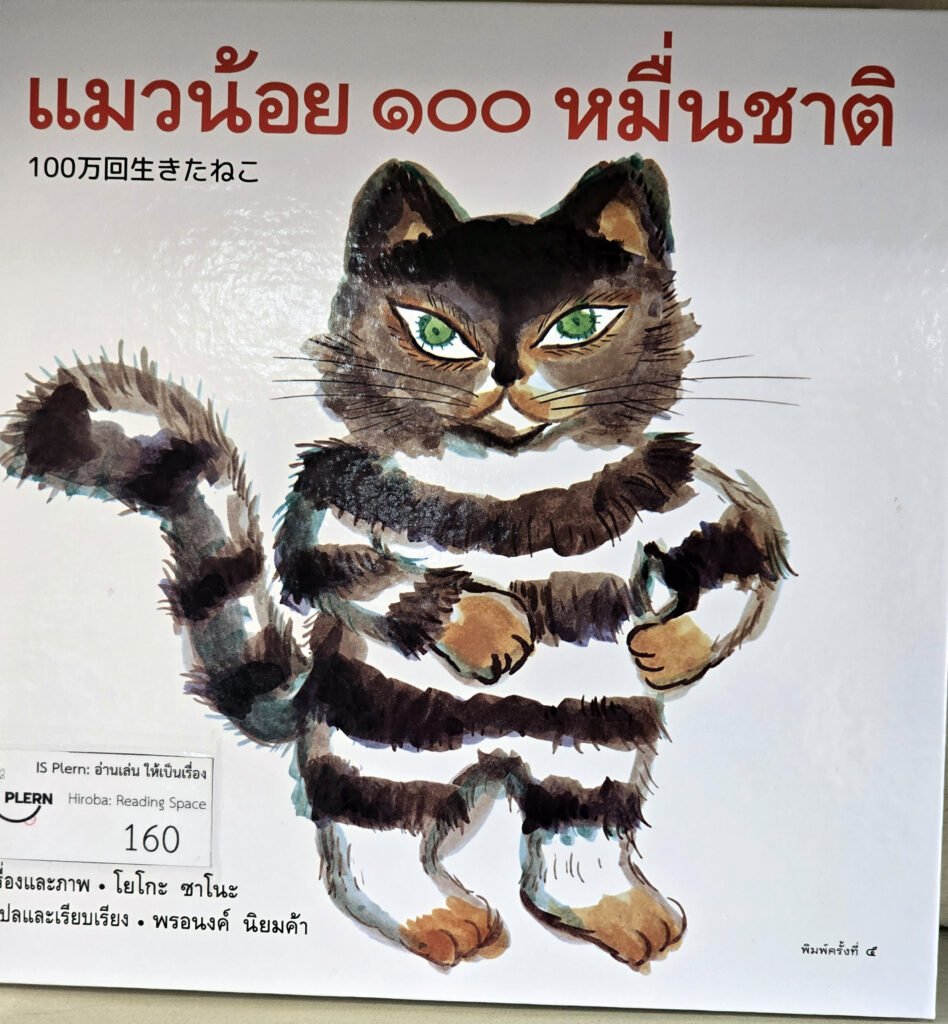
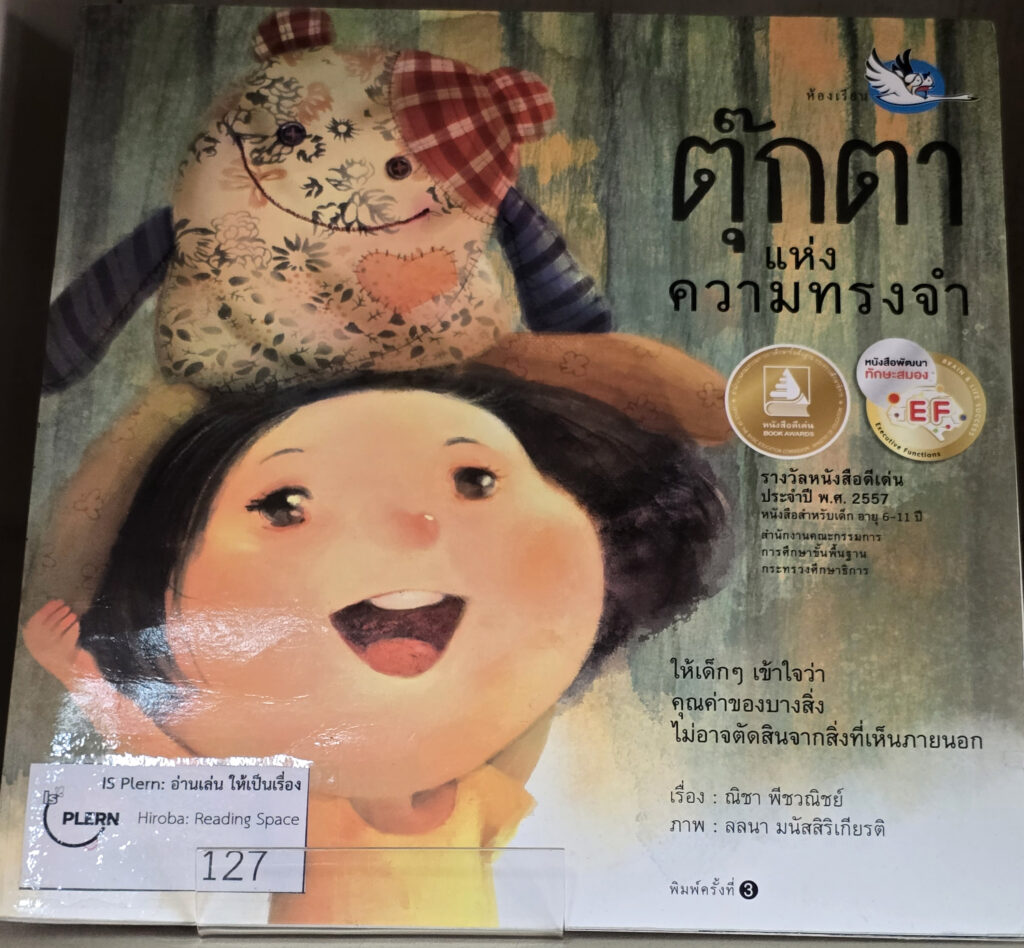
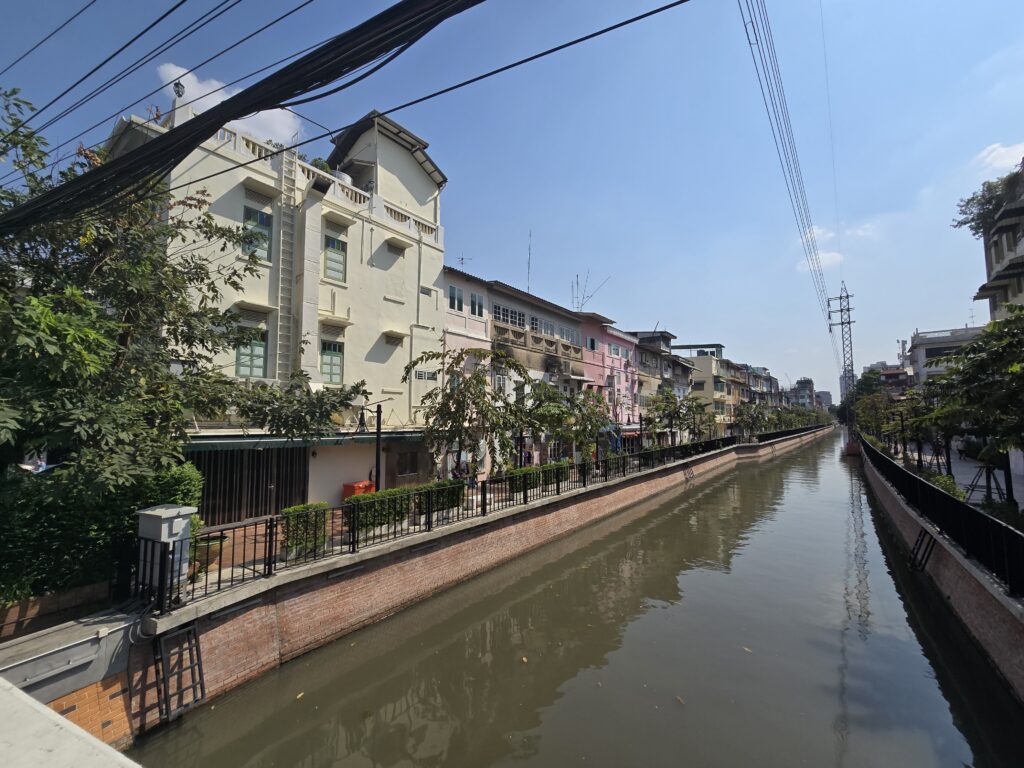
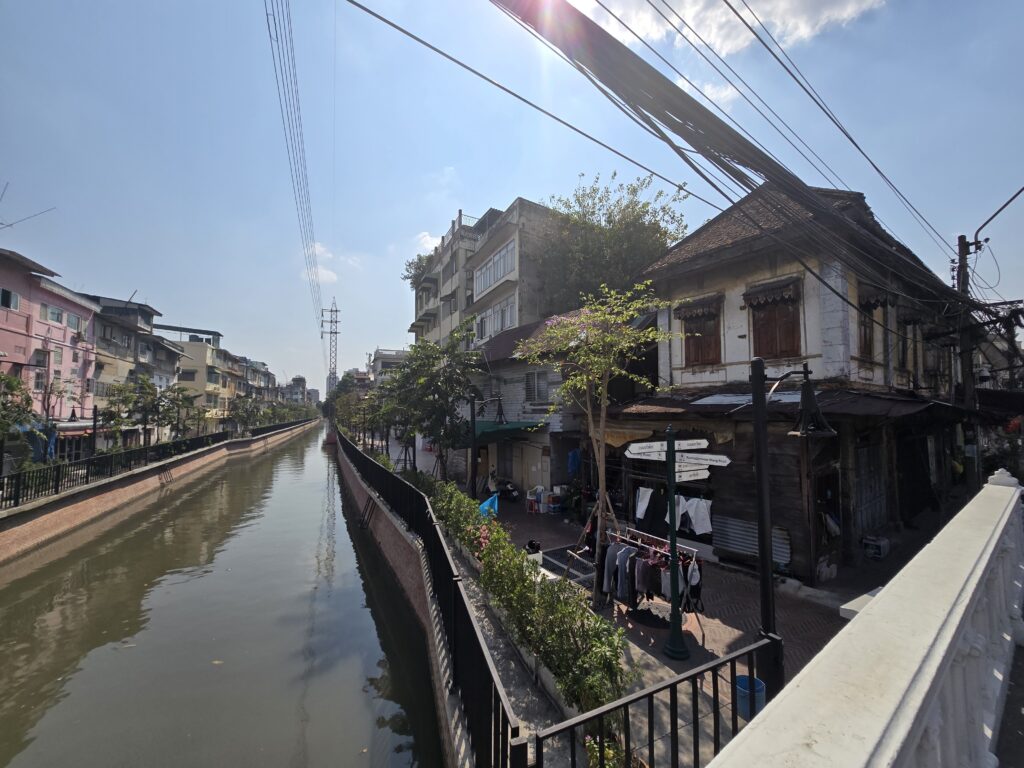
A network of canals runs through the entire city. In some places, they are terribly littered and smelly, while in others, they are quite alright. Passenger boats operate on them, like water buses. I haven’t taken a ride on one yet, but I plan to.
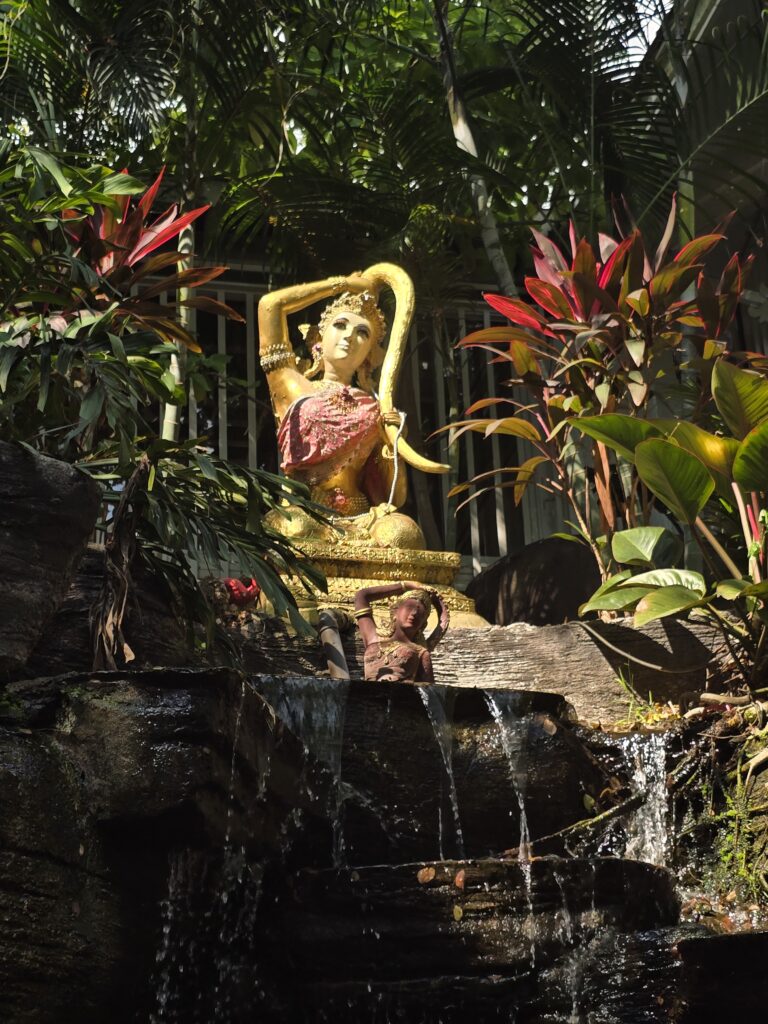
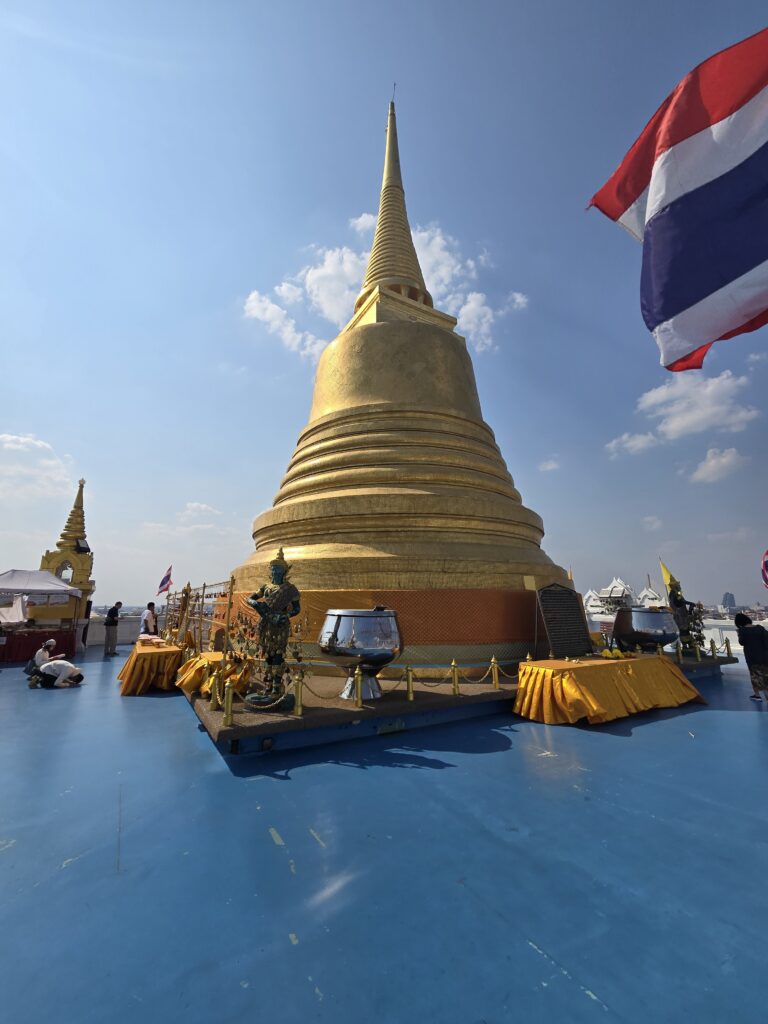
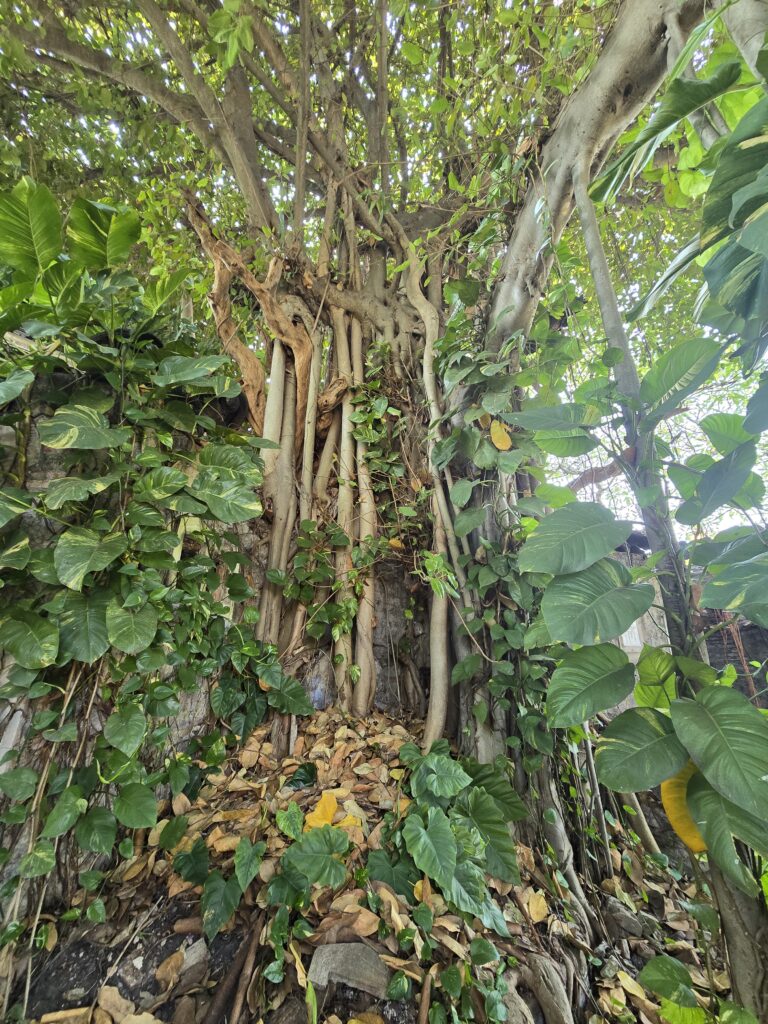
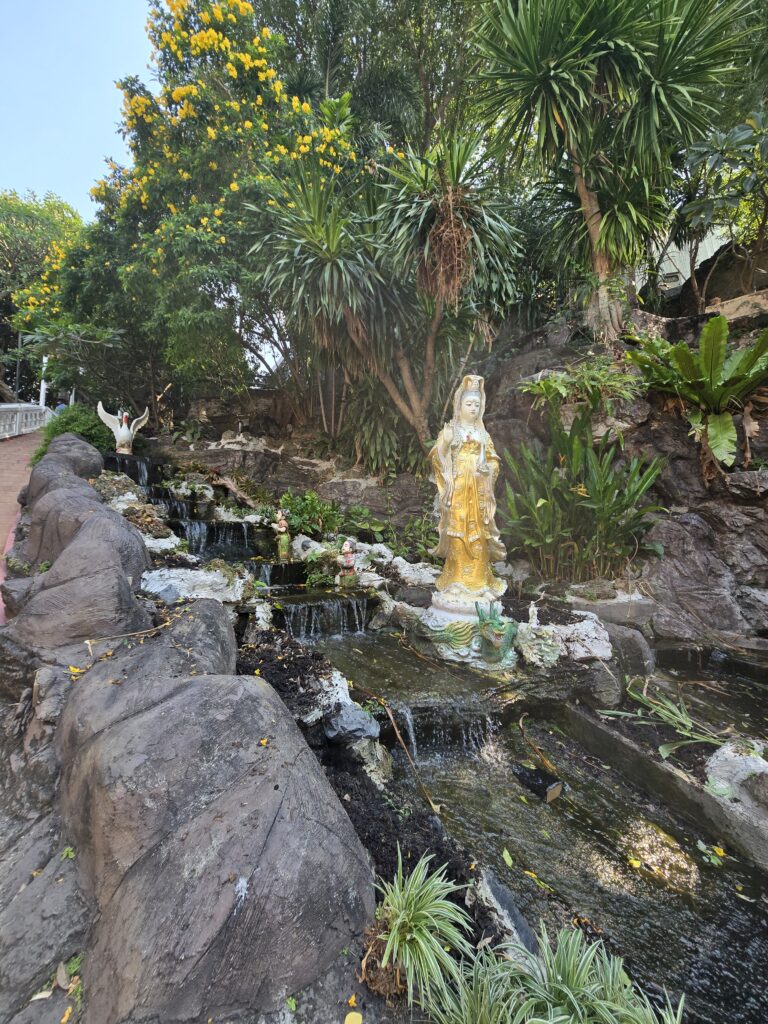
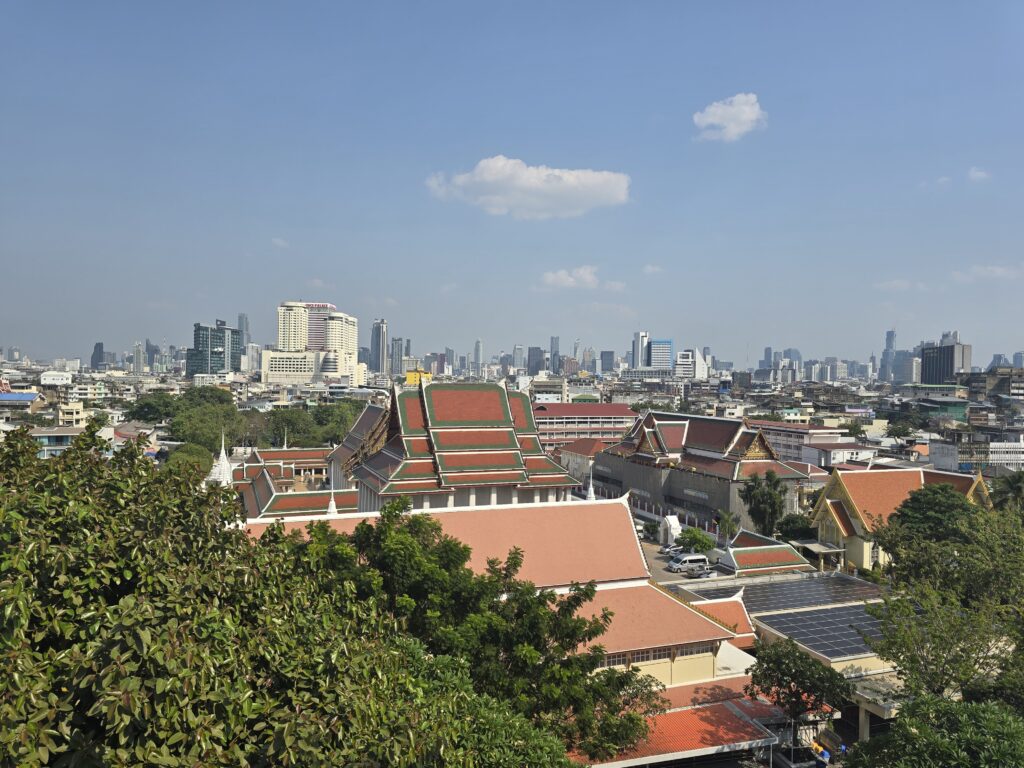
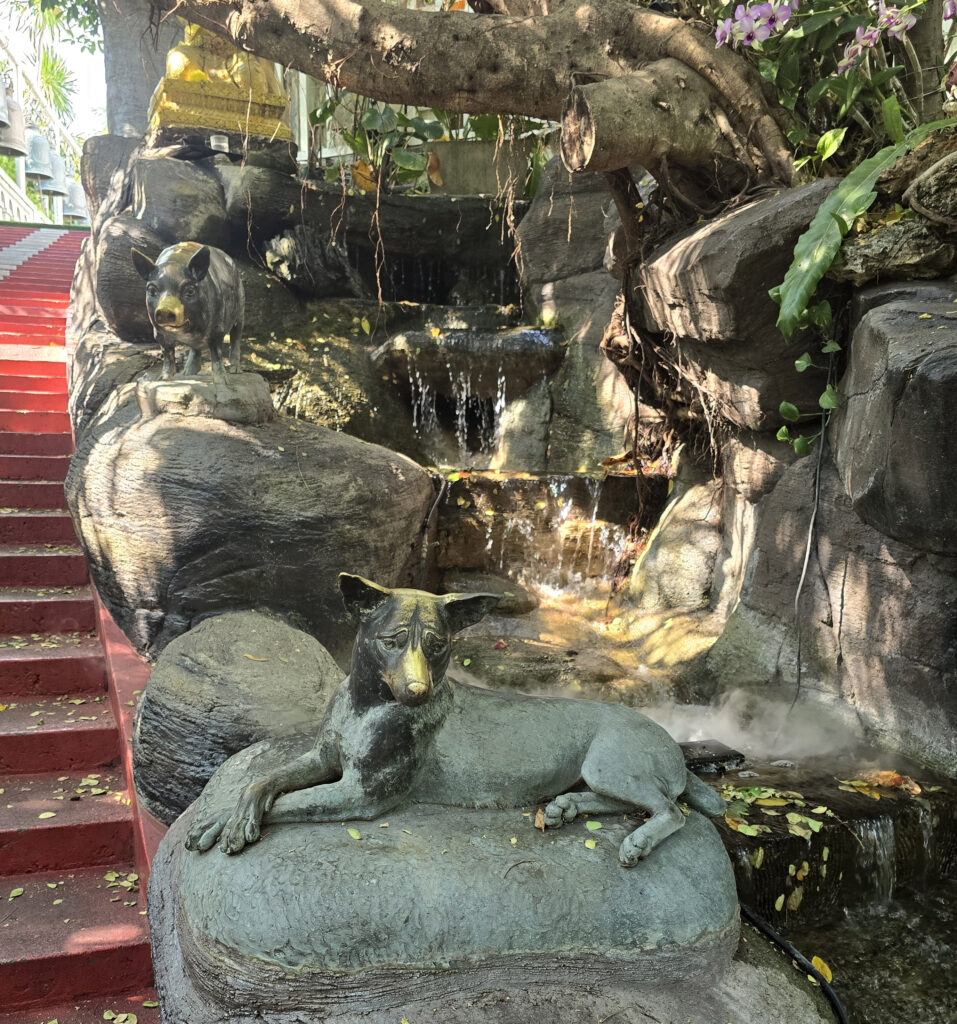
Golden Mount Temple (Wat Saket) is a stupa on an artificially created hill. If I remember correctly, there are 365 steps leading up to the stupa. The ascent is easy. While walking up the stairs, you’re surrounded by trees, carp fish, and statues – it’s a very pleasant, shadowy place. At the top, a great view of Bangkok opens up, and you realize just how many skyscrapers there are. It’s not just one specific district, like in Paris or Moscow, but they are everywhere.
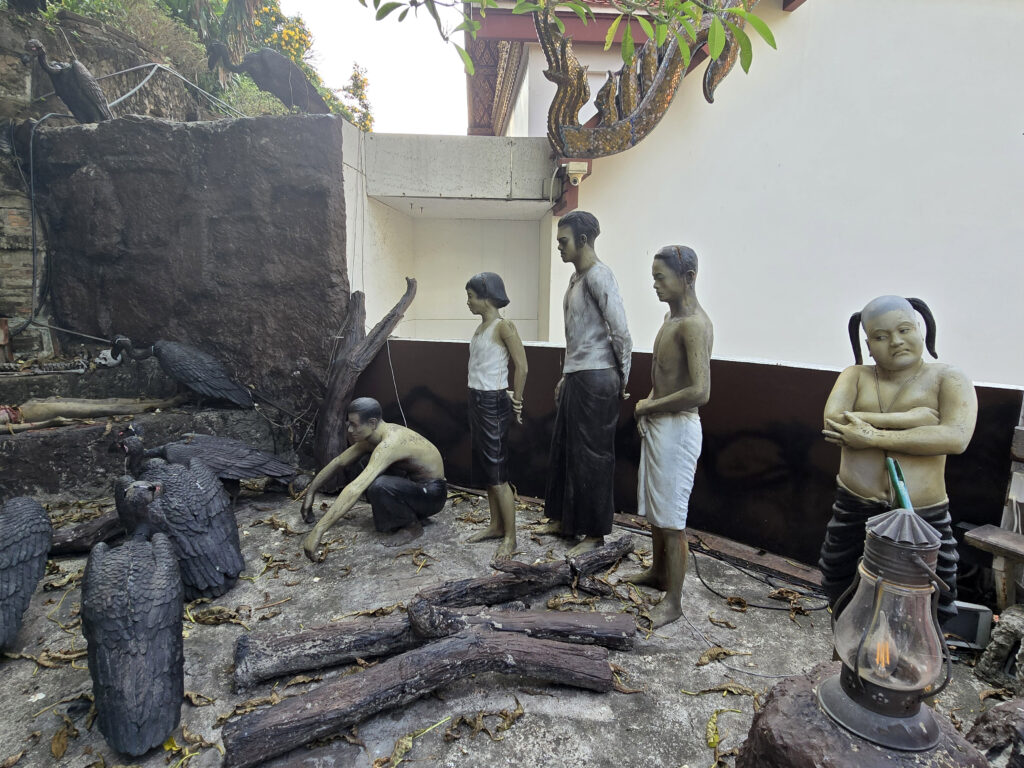
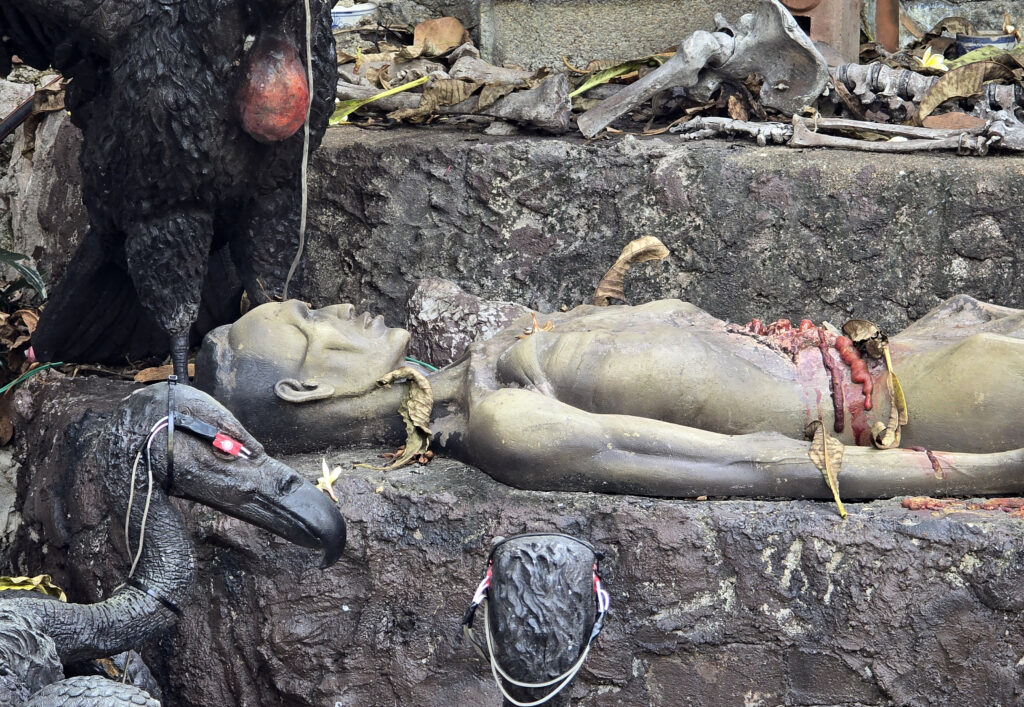
Another story – I forgot to take a picture of the plaque, so I’ll tell it from memory.
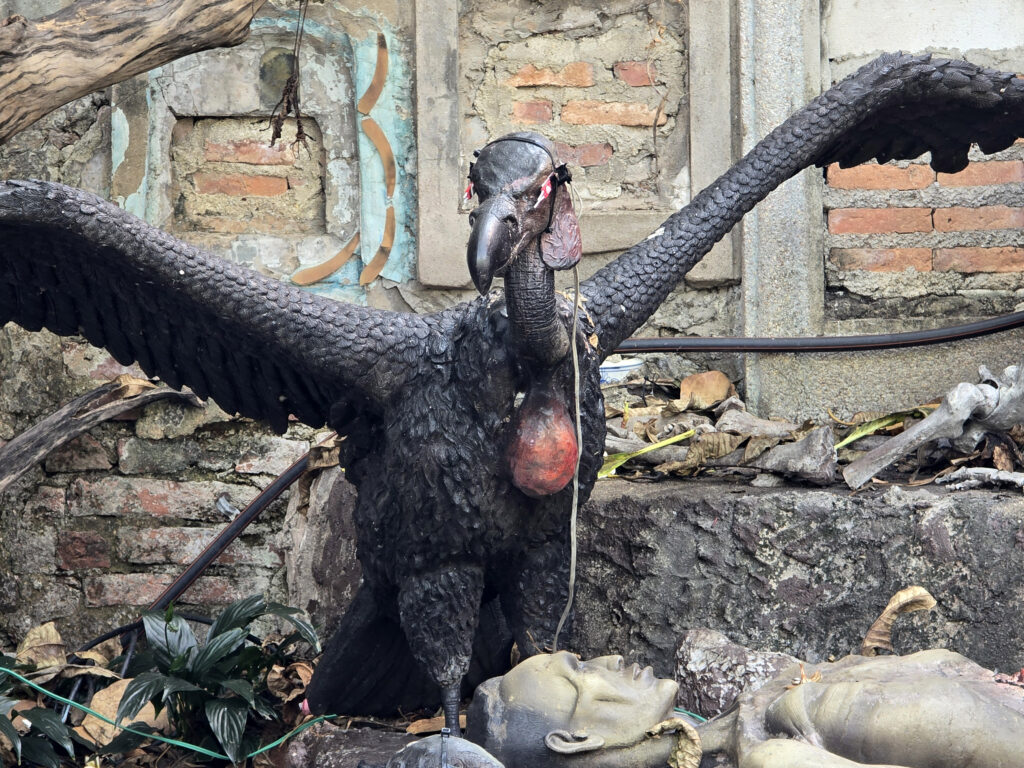
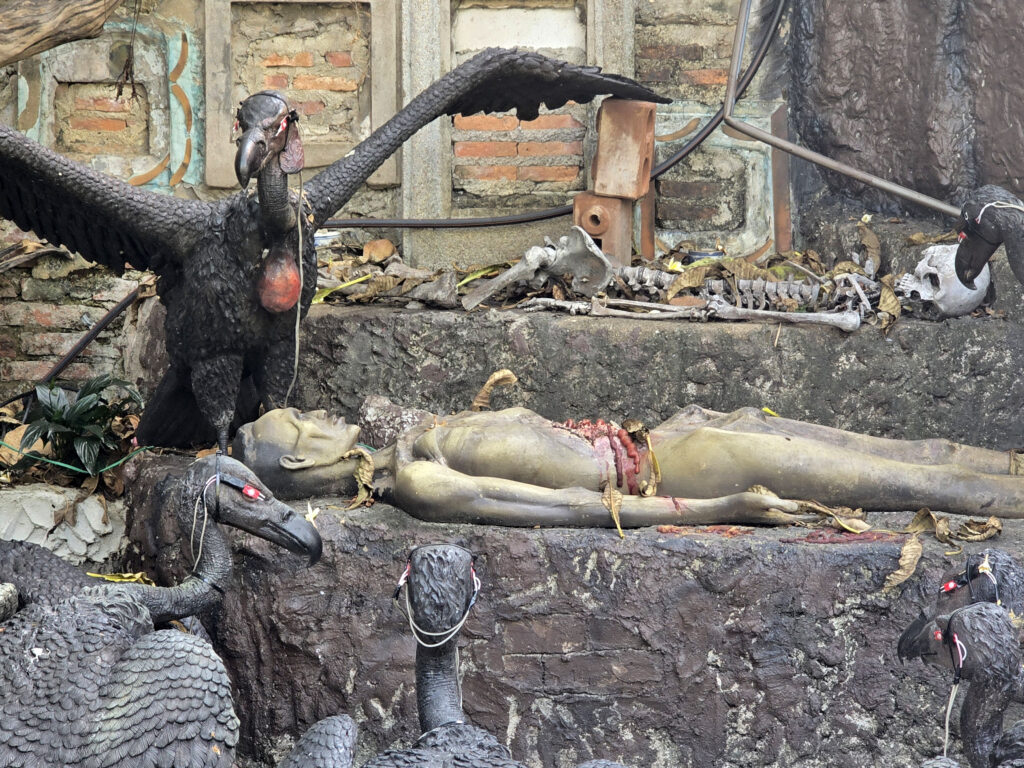
In the mid-19th century, cholera was rampant in Thailand, claiming hundreds of lives per day. The authorities only permitted the removal of corpses along a specific street that passed by this temple. Over time, hundreds of bodies accumulated there, which, for some reason, could not be cremated, and they were all eaten by vultures.
I really like these statues of vultures and corpses. The vultures even have wires leading to their eyes, presumably so they glow red in the dark. But in daylight, it looks like the vultures are wearing Google Glass. There’s also a recording of the vultures’ cries playing on loop. Atmospheric, to say the least. I’d love to see something like this in a movie.
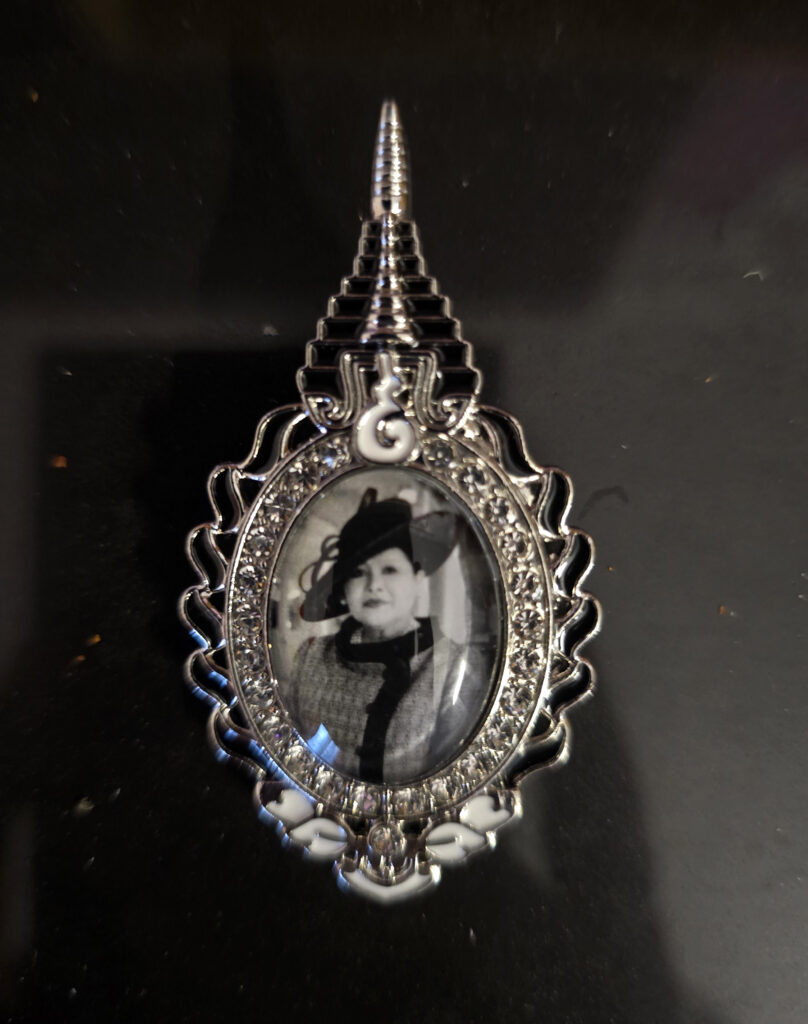
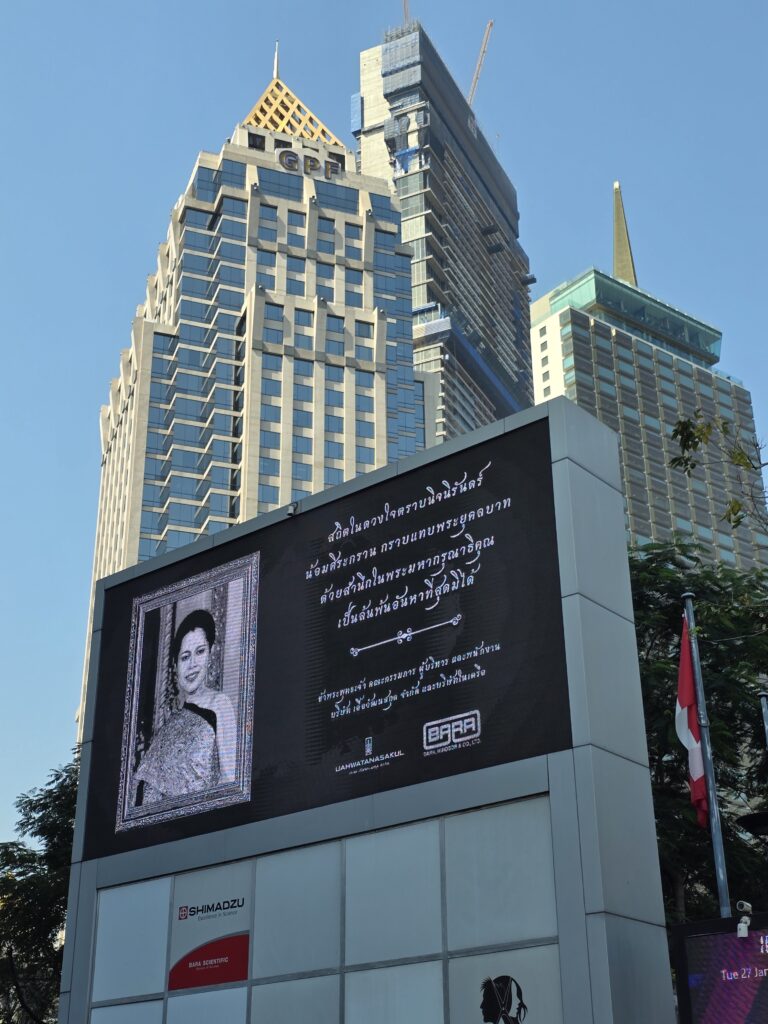
 At Golden Mountain, I’ve also bought this brooch, it’s the Queen Sirikit, the adored Queen Mother, who just passed in October 2025, so there are her portraits everywhere. It has plenty of cultural and other initiatives named after her, as she was a great leader and took care of her people. And also she liked fashion, and there is her museum of textile with her silken dresses, I’m gonna go there for sure, just today I’m tired after muay thai session, I’ll tell about it in the next posts.
Just a nice plant. 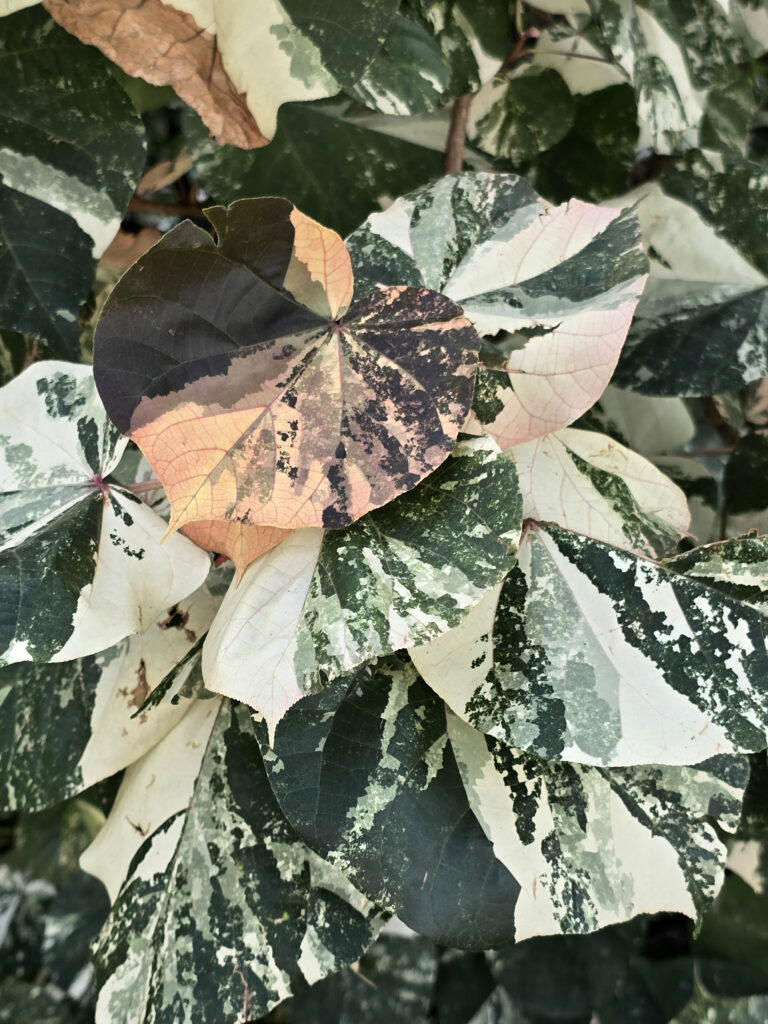 In Bangkok, a big part of life, mostly middle and high-class life, happens in shopping malls. They are heavily air-conditioned, and people even wear light jackets and sweaters there, despite the heat outside. They are huge consumerist paradises with so much food, like food is everywhere + ground floor and sometimes the first floors are dedicated entirely to countless food stalls, quite affordable for a European salary. Everything is clean, tidy, and cute.
Street food, by the way, is two or three times cheaper, but people sell it right next to busy highways, often from very old and poor-looking stalls and restaurants (they are just old and poor, but the quality of food is ok — I’ve never had any stomach problems here, even though I eat anywhere).
Price example:
Rice noodles with beef broth – 220 baht at a mall (+ much more tasty)
Wheat noodles with pork broth – 65 baht at a street food market
And in these air-conditioned spaces, there are completely different people — perfect fair-skinned Asian men and women with flawless makeup and expensive clothes — while on the street, you see ordinary Thais: darker-skinned, middle-aged, or young but seemingly from the countryside. In short, there’s a very noticeable social stratification.
I’ve recently read about malls displacing community centers (that don’t sell anything to people who come to share and practice their hobby), and this is a good illustration.
By the way, following the advice of the Deepseek, to find people here, I’ve installed the Meetup application that helps to search and participate in activities such as bicycle walks with people you don’t know or language exchange, and they always meet in malls’ food halls, ‘cos it’s a convenient place.
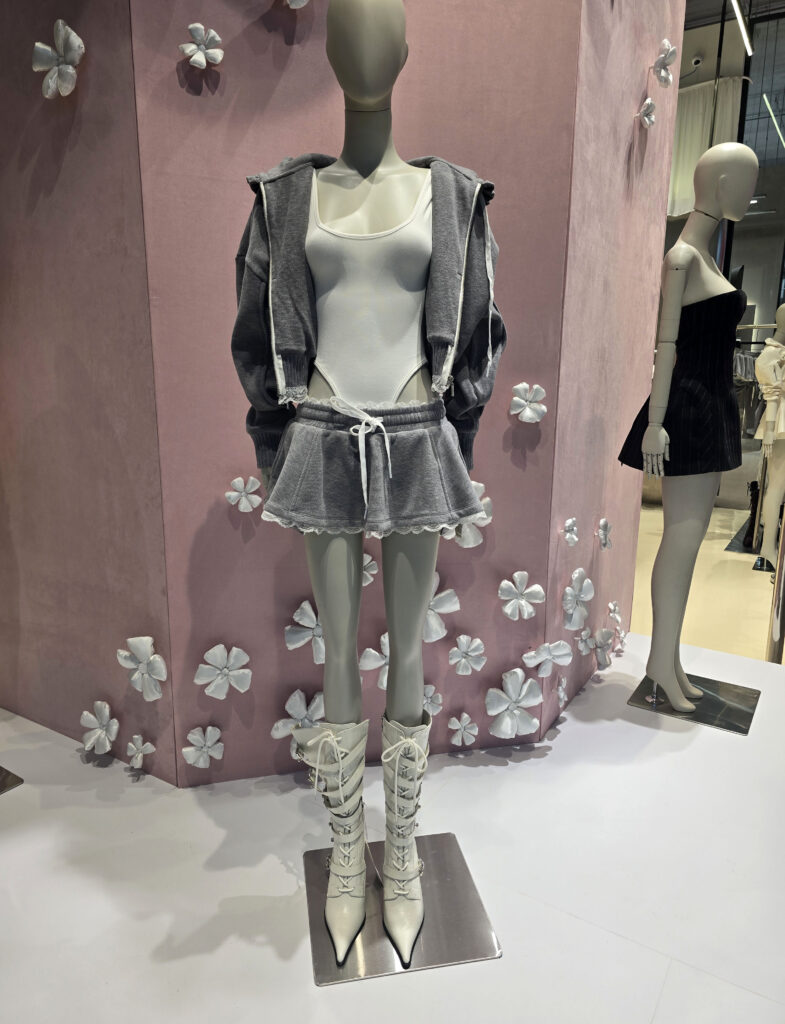
And yes, I never liked commercial malls in Russia or France because they’re so boring, but the malls in Bangkok appeal to me. First, the food; second, tons of products I’ve never seen before — plush toy. Everyone trendy here has at least one small plush toy attached to their bag, like Teletubbies or Labubu, Chubby boy, or whatever; they are all parts of families of plush toys with their stories. Too many stories by the way, hard to follow, but its complain from someone were growing up in the era of TV when everyone shared the same few stories. Anyway, I feel like after Nantes, it’s like I live in a village, calm, anti-consumerist, left-wing village, and I see what the world is about right now. I can’t help but adore the energy of this big, yet quite affordable qnd always summer city.
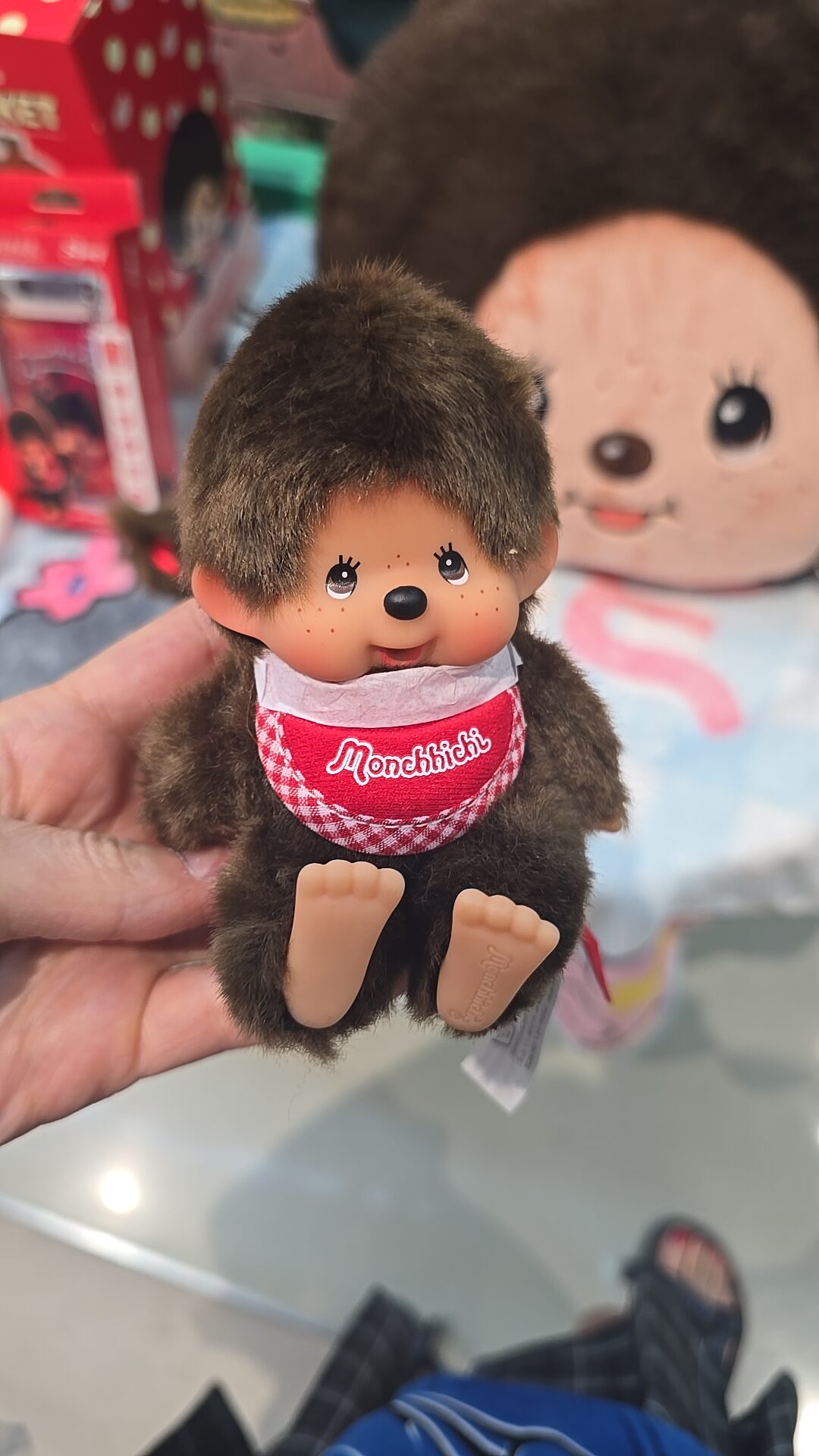
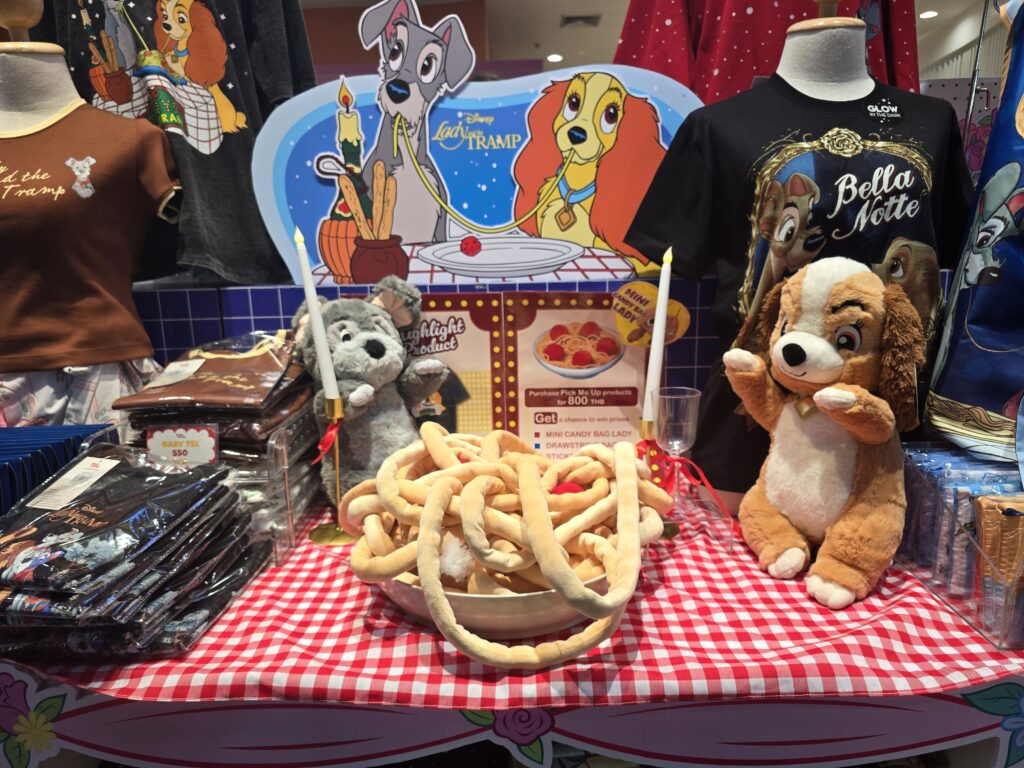
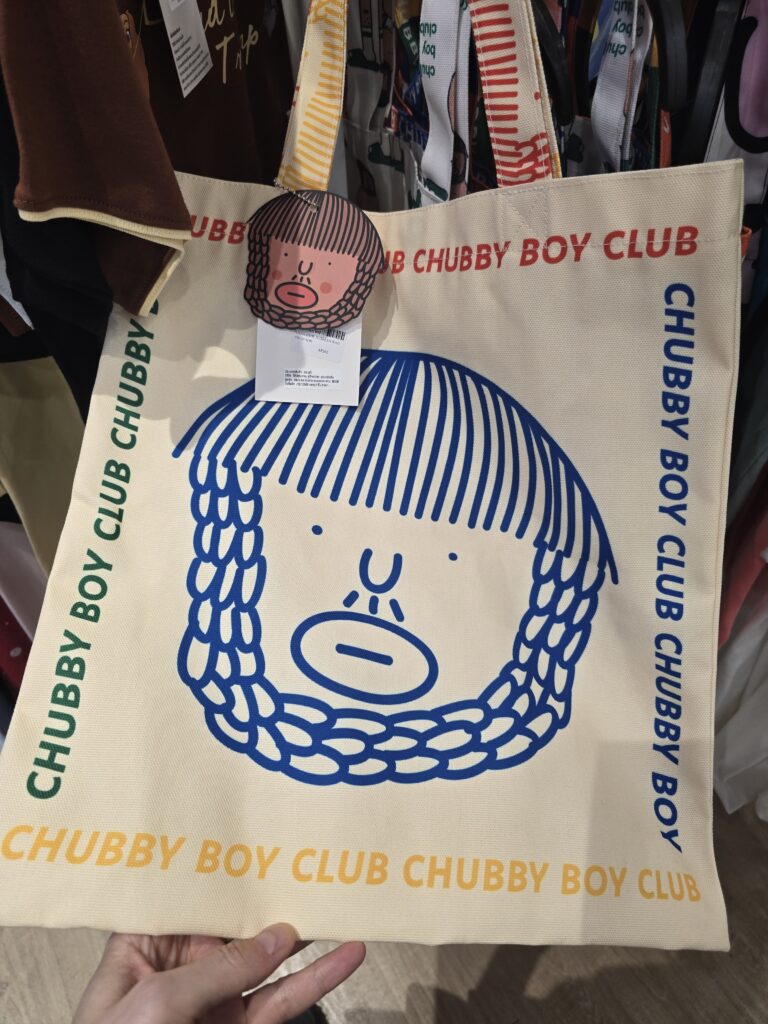
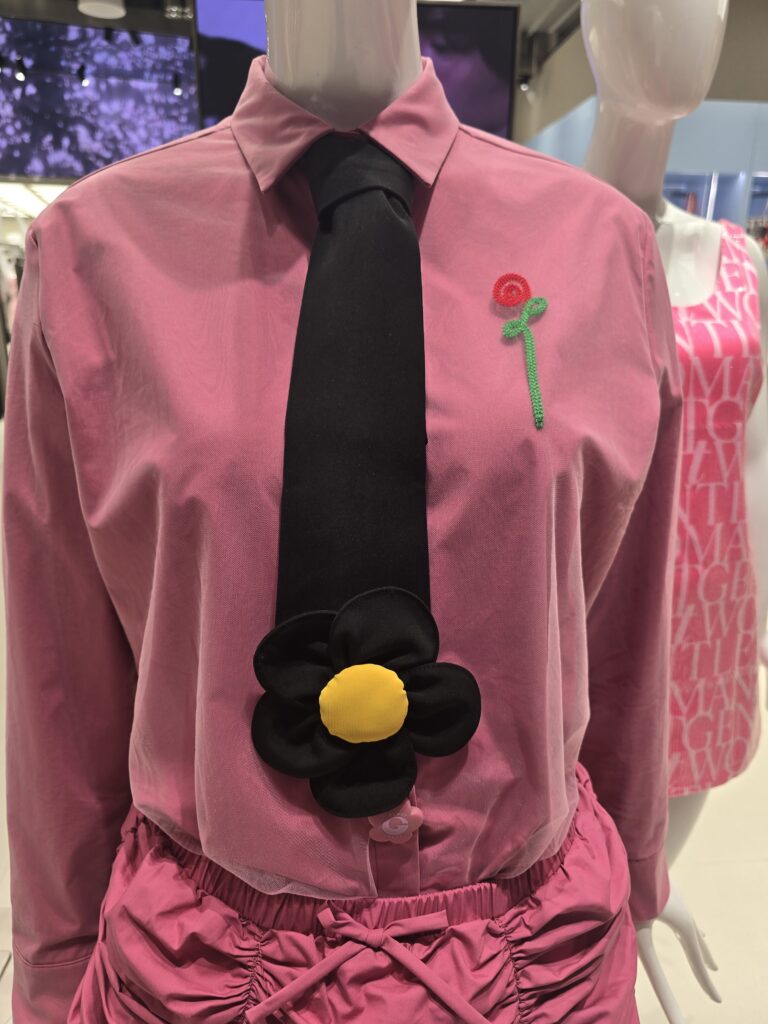
The tie in the photo is a Thai brand Gentrewoman — the name itself is great, plus look at this tie! I really love this style, and honestly, I’m in a hypomanic state right now, but damn, it’s so boring in France, even in Paris. Or maybe I’m just tired of it. Here, everything is new, and we always love what’s new.
I wandered into a cute store and unfortunately didn’t think to take pictures, but what I liked was the many upcycled designer items. So this is where the upcycling market is! In Nantes, I saw a few shops, but I didn’t like the items themselves. Here, the things are beautiful, and now I feel like launching my own clothing line — at least it’s clear that there’s interest in it in Asia.
Actually, I came to that mall for IKEA. The pillows in my hotel are simply terrible, so I thought I’d splurge on decent ones since I still have three weeks to sleep there. And I bought a bee and a French press.
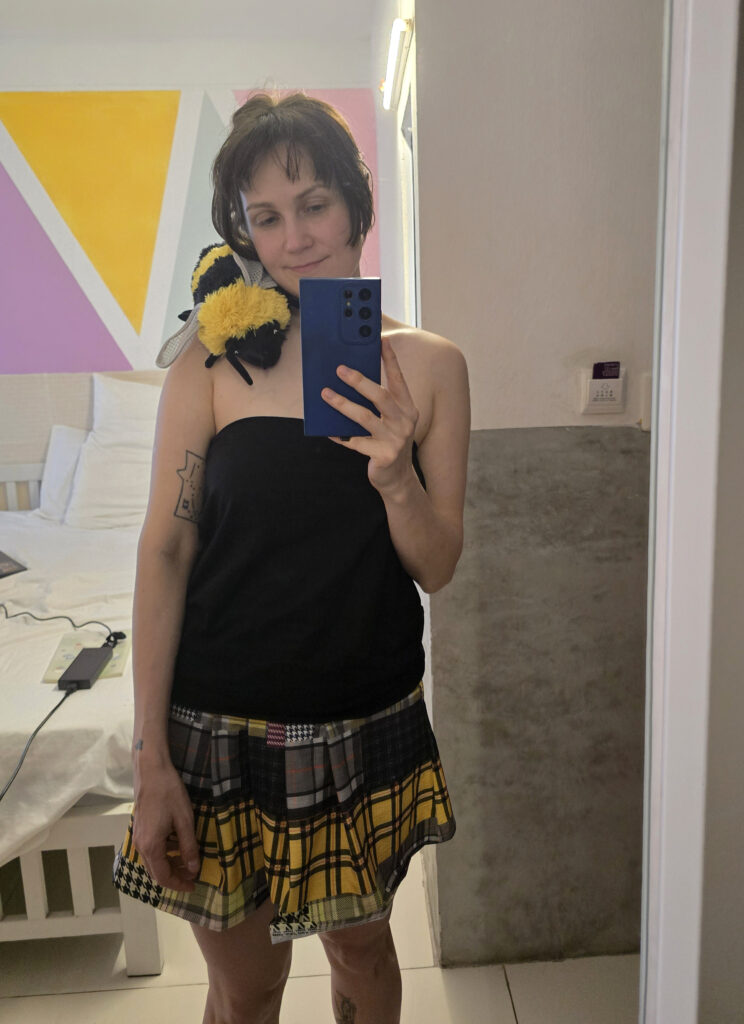
I’ll write more about the bee later because, on Dima Kaminsky‘s advice, I started reading a book, “The Life of the Bee” about the bee’s spirit, and I like it a lot. I’ll share some quotes from this book in the next posts.
Writing this, I want to go back to the places I’ve been and take good photos to show in a post, and then it hit me: this is probably how videos for Youtube are made — people first visit places, pick what they like, and then return to shoot videos, rather than filming from the get-go about something they don’t even know yet. It surprises me how sometimes the most obvious things aren’t obvious to me.